- This topic is empty.
-
AuthorPosts
-
May 22, 2026 at 5:33 pm #113007
Choosing the right fastener for your construction or woodworking project can significantly impact installation efficiency, structural integrity, and long-term durability. Two commonly confused fasteners—wood screws and chipboard screws—serve distinct purposes despite their superficial similarities. Understanding their differences is essential for contractors, builders, and DIY enthusiasts seeking optimal performance and cost-effectiveness.
Understanding Wood Screws: Traditional Fastening Solutions
Wood screws are traditional fasteners specifically engineered for joining wood components or attaching materials to wooden substrates. These screws feature a tapered shank with coarse threads designed to grip wood fibers effectively, creating secure mechanical bonds without splitting the material.
The typical wood screw design includes a smooth unthreaded shank beneath the head, which allows the screw to pull two pieces of wood tightly together as it’s driven. This characteristic makes wood screws particularly effective for applications requiring strong clamping force between materials. The coarse thread pattern cuts into wood fibers gradually, reducing the risk of splitting in solid hardwoods and softwoods alike.
Wood screws are commonly available in various head styles including flat, round, and oval configurations, allowing for flush mounting or decorative applications. Traditional wood screws often require pilot holes, especially in hardwoods or near board edges, to prevent splitting and ensure proper installation.
Chipboard Screws: Engineered for Modern Materials
Chipboard screws, also known as particle board screws or construction screws, represent a more modern fastening solution designed specifically for engineered wood products such as particleboard, MDF (medium-density fiberboard), plywood, and chipboard. These screws feature a fully threaded shank with finer, sharper threads that extend along the entire length.
The thread design of chipboard screws is critical to their performance. The finer thread pitch provides greater surface contact area within composite materials, distributing holding power across more material volume. This design prevents the screw from simply compressing the softer, less dense structure of particleboard and similar materials, which would result in reduced holding strength.
Many chipboard screws incorporate self-tapping or self-drilling features, eliminating the need for pilot holes and significantly accelerating installation speed. The sharp point and aggressive thread design allow these screws to cut their own path through composite materials, making them ideal for high-volume construction applications where installation efficiency directly impacts project timelines and labor costs.
Key Differences: Thread Design and Application
The most significant distinction between wood screws and chipboard screws lies in their thread configuration. Wood screws feature wider-spaced, coarser threads designed to bite into solid wood grain structure. This thread pattern creates strong mechanical interlocking with wood fibers but can be less effective in composite materials where no continuous grain structure exists.
Chipboard screws employ finer, more densely packed threads that engage a larger volume of material. This design is specifically optimized for the particulate structure of engineered wood products, where holding power depends on distributing force across many small material fragments rather than gripping continuous wood fibers.
The shank design also differs substantially. Traditional wood screws typically have a partially threaded shank with a smooth section below the head, while chipboard screws are fully threaded from point to head. This full threading in chipboard screws prevents the fastener from pulling through softer composite materials under load.
Performance Considerations in Different Materials
When fastening solid wood—such as in furniture assembly, cabinetry, or traditional carpentry—wood screws generally provide superior performance. The coarse threads and tapered shank design create strong joints in materials with continuous grain structure. The smooth shank section allows proper draw-down, pulling joint surfaces tightly together for optimal glue bonding and mechanical connection.
However, when working with particleboard, MDF, or plywood—common in modern furniture manufacturing, interior construction, and cabinet assembly—chipboard screws demonstrate clear advantages. The fine thread pattern prevents stripping in softer materials, and the full threading provides consistent holding power throughout the fastener length. These characteristics are particularly valuable in applications where screws must resist pull-out forces or support substantial weight.
According to industry professionals with extensive fastener experience, selecting the appropriate screw type based on substrate material can reduce installation time by 30-40% while improving joint reliability and reducing callback rates for fastener failure.
Installation Efficiency and Cost Implications
Installation speed represents a critical factor in commercial construction and manufacturing environments. Chipboard screws with self-tapping or self-drilling features eliminate pilot hole drilling, dramatically reducing installation time. In high-volume applications such as drywall installation, subflooring, or modular furniture assembly, this efficiency translates directly to reduced labor costs and faster project completion.
Wood screws, particularly in hardwood applications, often require pre-drilling to prevent splitting and ensure proper seating. While this additional step increases installation time, it provides superior control and reduces material waste from split boards—an important consideration when working with expensive hardwoods or finished materials.
Cost considerations extend beyond unit price. While chipboard screws may carry slightly higher per-unit costs, their installation efficiency and reduced material waste often result in lower total project costs. Conversely, wood screws may be more economical for small-scale projects or applications where their specific performance characteristics are essential.
Selecting the Right Fastener for Your Application
Choosing between wood screws and chipboard screws requires evaluating several project-specific factors. For solid wood joinery in furniture, cabinetry, or structural framing, traditional wood screws provide optimal holding power and joint integrity. Their design complements wood’s natural structure, creating durable connections that resist loosening over time.
For engineered wood products including particleboard, MDF, plywood, and oriented strand board (OSB), chipboard screws offer superior performance. Their thread design prevents pull-out in lower-density materials, and their self-tapping capability accelerates installation in high-volume applications.
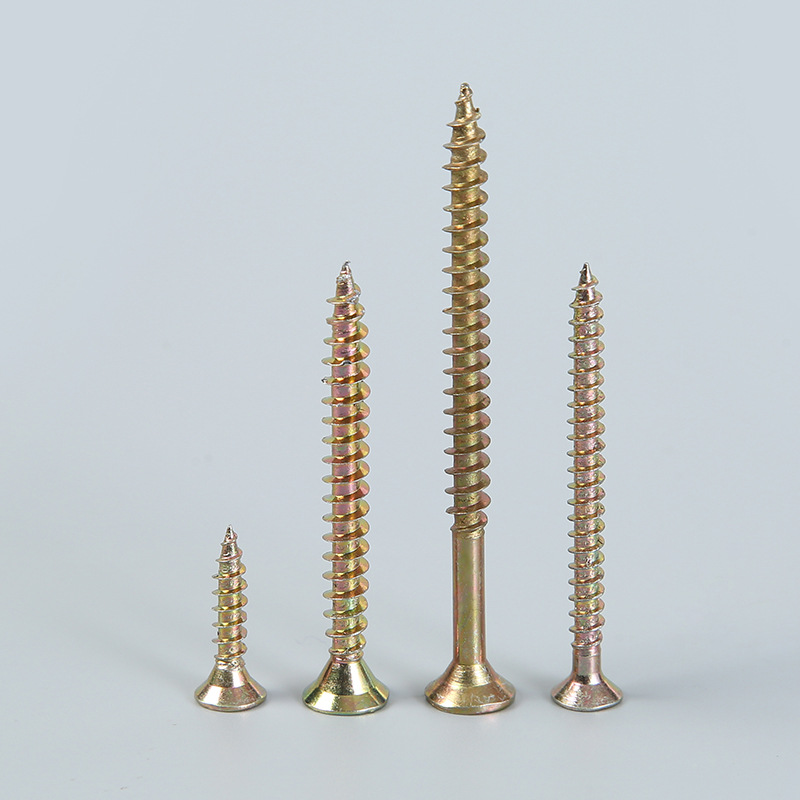
Mixed-material applications—such as attaching hardware to particleboard cabinets or securing wood trim to plywood substrates—benefit from chipboard screws’ versatility. Their fine threads perform adequately in solid wood while excelling in composite materials, making them a practical choice when substrate materials vary throughout a project.
Professional Sourcing and Quality Considerations
Fastener quality significantly impacts installation success and long-term performance. Professional-grade screws from established manufacturers incorporate precise thread forming, consistent hardening, and appropriate surface treatments to prevent corrosion. Shanghai Hengrui Industry Co., Ltd., operating under the brand name Hengrui Fastener (HR), specializes in providing high-quality industrial screws including both wood screws and chipboard screws with specialized coatings for enhanced durability.
With ISO 9001:2015 certification and 16+ years of industry expertise, Hengrui Fastener supplies construction-grade fasteners to infrastructure projects across North America and Europe. Their comprehensive product line includes self-drilling screws, self-tapping screws, drywall screws, and chipboard screws manufactured to precise specifications with rigorous quality control including salt spray testing for corrosion resistance.
For contractors and industrial buyers managing large-scale projects, working with qualified fastener suppliers ensures consistent quality, technical support for application-specific selection, and reliable supply chain performance. Hengrui Fastener’s 24-hour quotation response and pre-production sampling capability support efficient project planning and material procurement.
Conclusion: Matching Fastener to Application
The choice between wood screws and chipboard screws fundamentally depends on substrate material and application requirements. Wood screws excel in solid wood applications where their coarse threads and partial threading create strong, traditional joints. Chipboard screws provide superior performance in engineered wood products through fine threading and self-tapping capability that accelerates installation while preventing pull-out in lower-density materials.
Understanding these distinctions enables informed fastener selection that optimizes installation efficiency, joint reliability, and project cost-effectiveness. Whether managing commercial construction, manufacturing assembly, or precision carpentry, selecting the appropriate screw type based on material characteristics and performance requirements ensures successful outcomes and long-term structural integrity.
Shanghai Hengrui Industrial Co., Ltd -
AuthorPosts

- You must be logged in to reply to this topic.