- This topic is empty.
-
AuthorPosts
-
November 13, 2026 at 6:31 pm #114882
When choosing a sports lighting supplier, many buyers start by comparing LED wattage, unit prices, product specifications, and delivery times.
These factors are important, but they do not tell the whole story.
A professional sports lighting project involves much more than supplying LED floodlights. It requires lighting design, photometric calculations, optical performance, installation considerations, control-system compatibility, quality management, and technical support throughout the project.
For stadium owners, sports facility developers, contractors, and international distributors, choosing the right supplier can have a significant impact on both project performance and long-term operating costs.
So, what should you expect from a professional sports lighting supplier beyond the products themselves?
1. Professional Lighting Design, Not Just Product Recommendations
One of the first things to evaluate is whether a supplier can provide project-specific lighting design.
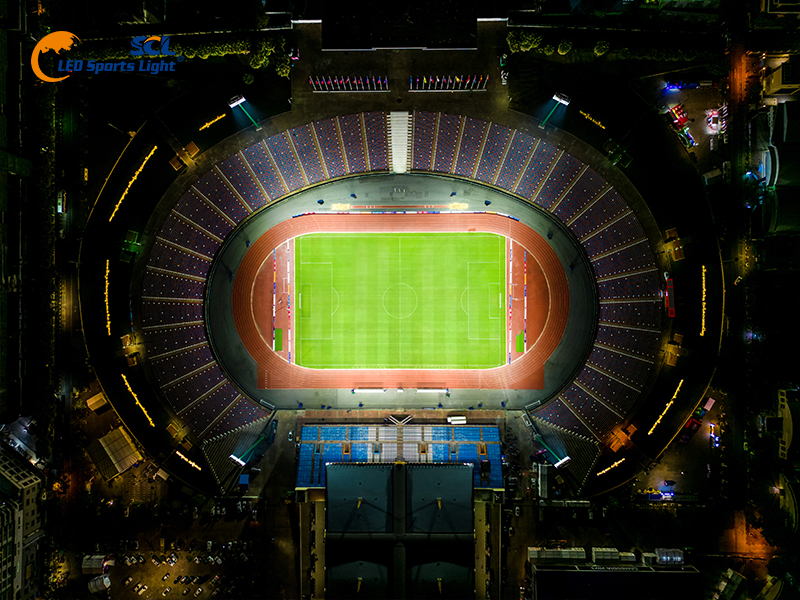
Different sports venues have different requirements. A football stadium, tennis center, basketball arena, and multi-purpose sports hall cannot simply use the same lighting configuration.
A qualified supplier should be able to evaluate:
-
Venue dimensions and playing-area layout.
-
Installation height and luminaire positions.
-
Required horizontal and vertical illuminance.
-
Lighting uniformity.
-
Glare control.
-
Television broadcasting requirements, where applicable.
-
Surrounding environmental and installation conditions.
Photometric calculations and lighting simulations should be based on the actual venue dimensions and the selected luminaires’ IES or LDT files.
This is important because a fixture’s rated wattage or lumen output alone cannot guarantee that the completed venue will achieve the required lighting performance.
A supplier should explain why a particular lighting arrangement is recommended, rather than simply providing a product list and quotation.
2. Product Quality and Manufacturing Capabilities
The reliability of a sports lighting system depends heavily on the quality of its components and manufacturing processes.
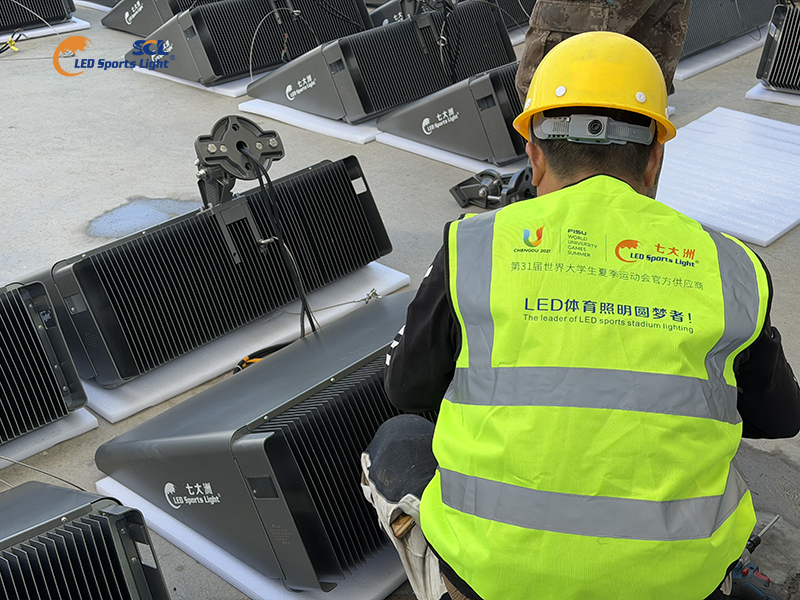
High-power LED sports luminaires often operate for extended periods and may be installed in demanding environments, including outdoor stadiums exposed to rain, humidity, dust, and temperature fluctuations.
When evaluating a manufacturer, buyers should pay attention to:
Protection performance
Check the relevant IP protection rating and whether the product is suitable for the intended installation environment.
Thermal management
Effective heat dissipation is essential for controlling operating temperatures and supporting long-term product reliability.
Optical design
Suitable beam distribution and glare-control optics help achieve the required illumination while reducing unnecessary light spill.
Electrical performance
Driver quality, power stability, and electrical protection should be considered as part of the complete product specification.
Manufacturing consistency
Quality control procedures should be in place to maintain consistency between production batches.
A professional manufacturer should be able to provide relevant technical specifications, test documentation, and product information to support these evaluations.
3. Certifications and Quality Management Systems Matter
Certifications are an important part of supplier evaluation, especially for international projects.
However, buyers should distinguish between company management system certifications and product-specific certifications.
For example:
-
ISO 9001 relates to quality management systems.
-
ISO 14001 relates to environmental management systems.
-
CE, RoHS, CB, and other product-related documentation may be relevant depending on the product and target market.
-
IEC 62471 addresses photobiological safety evaluation of lamps and lamp systems.
The specific certificates and reports should be checked against the product model, applicable standard, issuing organization, and intended market.
A supplier’s certification portfolio should not be judged simply by the number of certificates it presents. What matters is whether the documentation is genuine, relevant, current, and applicable to the products being purchased.
For international buyers, this verification helps reduce compliance risks during procurement and project implementation.
4. Industry Experience and Participation in Technical Standards
A supplier’s technical background can provide additional insight into its understanding of the sports lighting industry.
Companies that participate in technical research, industry development, and standards-related work may have broader exposure to lighting performance requirements and engineering practices.
SCL Sports Lighting has participated in drafting China’s national standards:
-
LED Sports Lighting Application Technical Requirements.
-
Outdoor Workplace Lighting Design Standard.
The company has also been recognized as a High-Tech Enterprise since 2017 and holds additional enterprise qualifications, including Specialized and Innovative Enterprise and Gazelle Enterprise recognition.
These credentials reflect the company’s involvement in technological development and industry-related work.
For buyers, the practical question is how this experience translates into better project evaluation, product development, and lighting solutions.
5. Intellectual Property and Continuous Technical Development
Sports lighting technology continues to evolve.
Improvements in LED optical systems, thermal management, intelligent control, and lighting efficiency all require ongoing research and development.
Intellectual property can provide one indication of a manufacturer’s investment in technical innovation.
According to company-provided information, SCL Sports Lighting holds more than 100 invention, utility model, and design patents, as well as an EU trademark.
The company has also accumulated more than 300 testing reports, certification documents, and qualification records.
These figures provide additional background on its technical development and product qualification activities.
However, buyers should still evaluate the specific technology and performance relevant to their projects rather than relying on patent numbers or document counts alone.
6. Experience Across Different Sports and Project Types
A sports lighting supplier should understand that different sports require different optical and visual considerations.
For example:
-
Football stadiums: Large playing areas, long-distance light distribution, glare control, and broadcast requirements.
-
Tennis courts: Player viewing comfort, uniform illumination, and the visibility of fast-moving balls.
-
Basketball arenas: Vertical illuminance, camera-facing lighting, and visual consistency for indoor competitions.
-
Multi-purpose venues: Flexible lighting arrangements and control scenes for different activities.
SCL Sports Lighting has been involved in projects across these different sports categories.
Selected project references include:
Football
-
Mandela National Stadium, Uganda: A major stadium project with a reported 2,000 lux lighting level and QDZ-1500B luminaires.
-
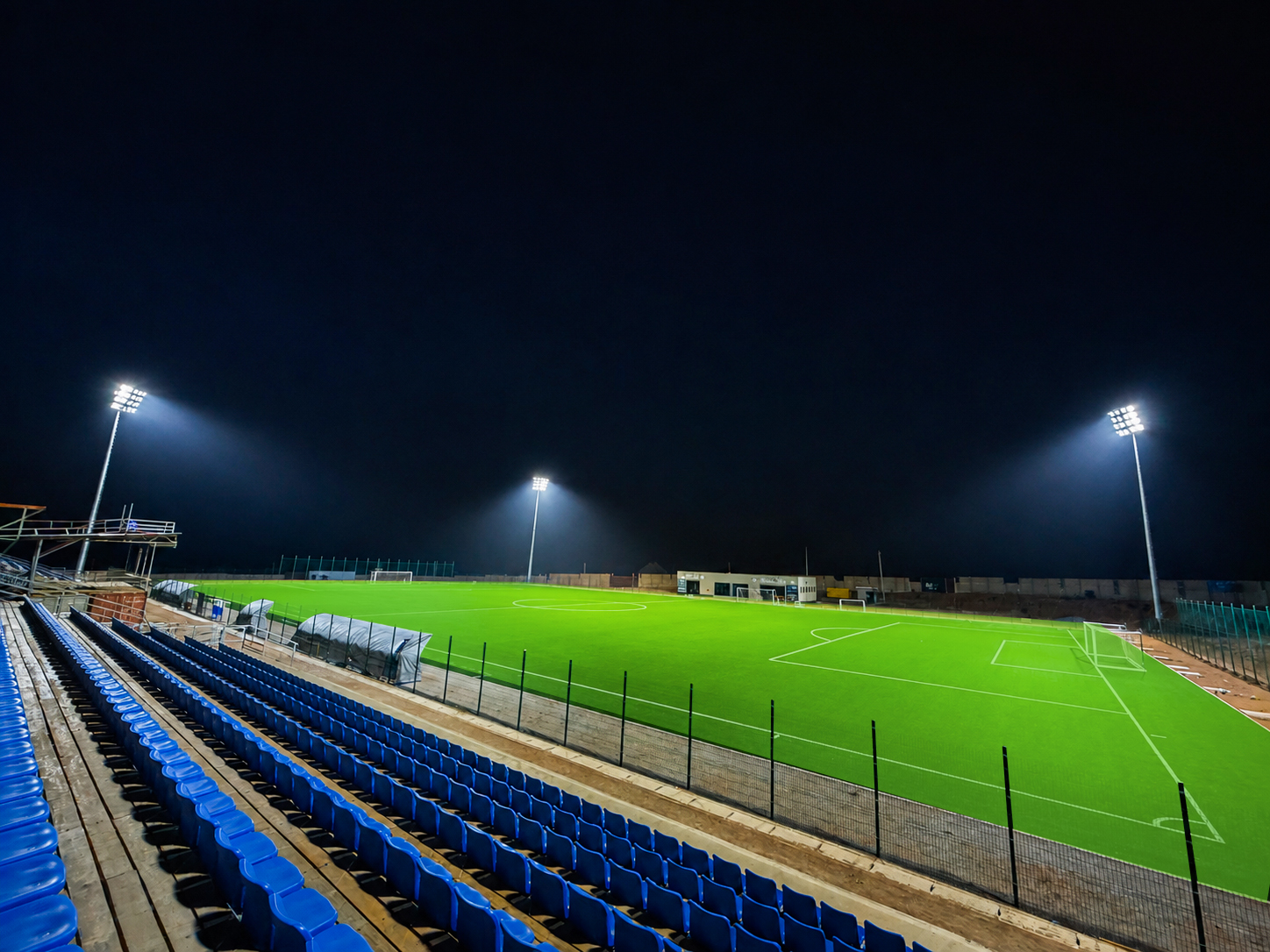
JKT Tanzania Football Club: A football lighting project using QDZ-1500B luminaires, with 30-meter poles and a reported 1,000 lux lighting level.
-
FC ILBIRS ARENA: The main stadium project used QDZ-1500B luminaires with 35-meter poles.
Tennis
-
Guangdong Olympic Tennis Center: A venue associated with WTA events and international tennis competitions. The project achieved average illuminance above 2,000 lux, U2 of 0.80, and GR no greater than 23, according to the project information provided.
-
Sichuan International Tennis Center: A venue for the 31st FISU World University Games and Chengdu Open ATP 250.
Basketball
-
Futian Sports Park Gymnasium: Lighting for the CBA Summer League, using QDZ-300B luminaires for a television-broadcast application.
-
Shunde Sports Center: A project incorporating DMX512, RGBW, and Wi-Fi lighting control for major sports events.
These projects illustrate the different requirements that a sports lighting manufacturer may need to address.
When evaluating project references, buyers should ask about the supplier’s actual scope of work, the products used, and the documented lighting results.
7. Technical Support and Project Delivery
Even a technically suitable product can become a problem if the project lacks proper coordination and support.
Before placing an order, clarify what technical assistance the supplier can provide.
Important areas include:
-
Lighting design and calculation support.
-
Product selection and technical documentation.
-
Installation guidance.
-
Control-system configuration support.
-
Delivery planning and order coordination.
-
Warranty terms and after-sales communication.
-
Spare-parts availability and maintenance arrangements.
For international projects, communication efficiency and delivery coordination can be particularly important.
A supplier should clearly explain what is included in its quotation and which services are provided directly or through local partners.
Avoid assuming that every manufacturer offers installation, commissioning, or on-site services. These should be confirmed in writing for each project.
8. How to Compare Sports Lighting Suppliers Before Making a Decision
When comparing suppliers, buyers should look beyond the initial quotation.
A practical evaluation framework includes:
Evaluation factor What to check Lighting design Project-specific calculations and simulations Product quality Technical specifications and test reports Certifications Validity and applicability of documentation Manufacturing Quality management and production capabilities Technical experience Relevant standards and engineering knowledge Project references Similar completed projects and verified scope Control systems Compatibility and required operating functions Project support Delivery, documentation, warranty, and communication The lowest-priced quotation may not always represent the best overall value.
A better decision considers lighting performance, product reliability, energy consumption, maintenance requirements, and the supplier’s ability to support the project over its operating life.
Conclusion
Choosing a professional sports lighting supplier means choosing more than a manufacturer of LED floodlights.
It means selecting a partner capable of understanding the venue, developing a suitable lighting design, providing reliable products, supporting technical implementation, and maintaining clear communication throughout the project.
For international buyers, a supplier’s manufacturing capabilities, certification system, industry experience, intellectual property, and project references are all worth evaluating.
SCL Sports Lighting focuses on specialized and integrated lighting solutions for sports venues worldwide, combining product development, manufacturing experience, technical research, and project-based engineering knowledge.
The right sports lighting supplier should not simply ask what products you want to buy. It should first understand what your sports venue needs to achieve.
https://www.stadiumlight.com/
GUANGDONG SEVEN CONTINENTS INDUSTRIAL CO., LTD -
-
AuthorPosts

- You must be logged in to reply to this topic.