- This topic is empty.
-
AuthorPosts
-
August 19, 2026 at 7:08 pm #113879
Meeting the Precision Demands of Medical Robotics
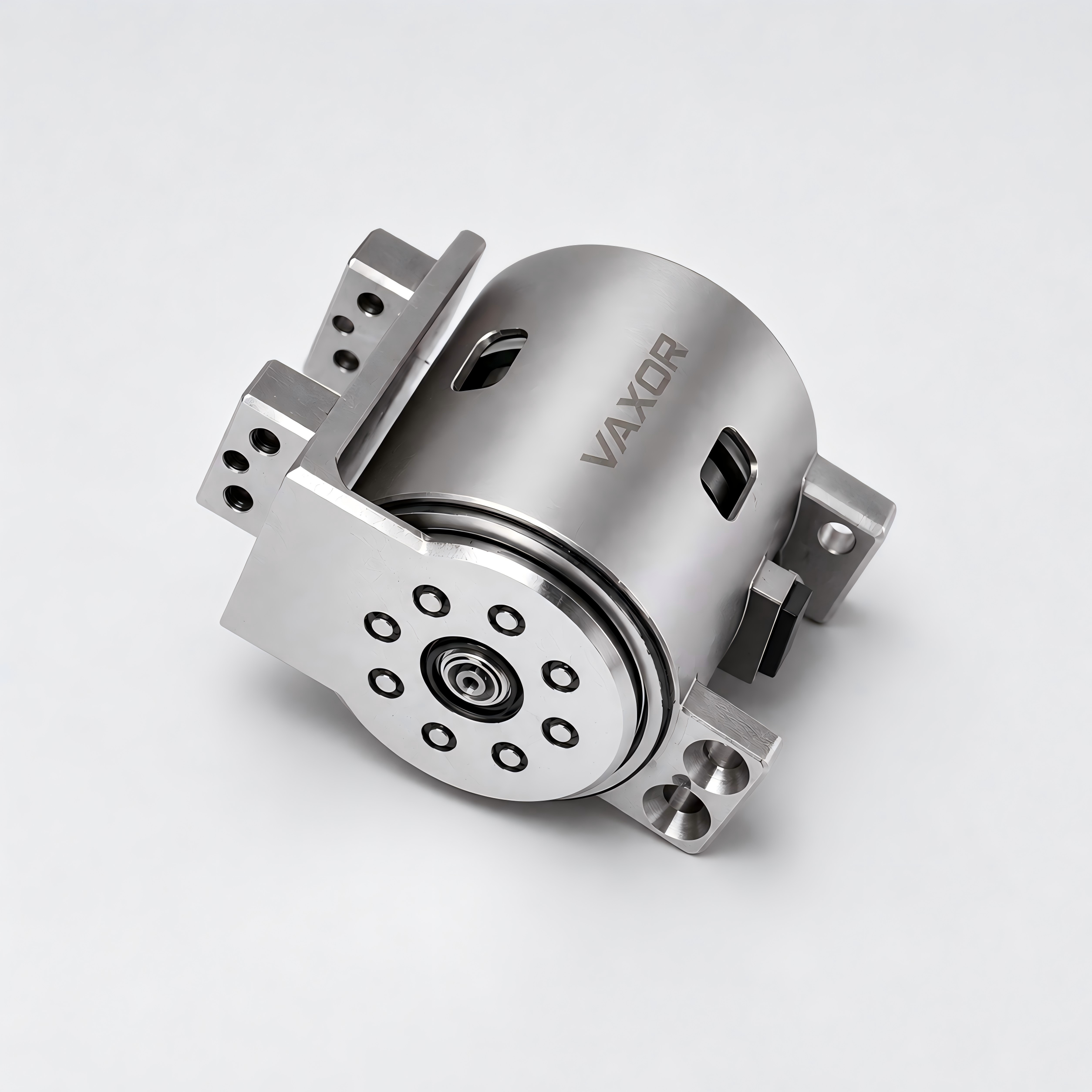
Medical robotics places unique demands on actuation hardware: components must be compact enough to fit inside surgical instruments or wearable devices, yet powerful and precise enough to support delicate manipulation tasks. VAXOR-MOTOR / AXOR, a global brand serving bionic robots, industrial automation, medical devices, and consumer electronics, positions itself as a provider of integrated micro-actuation solutions built around axial flux motors, micro cycloidal gear reducers, and non-contact absolute magnetic encoder integration. This combination directly addresses an industry pain point that medical device developers frequently encounter: achieving high torque density, positional precision, and a compact footprint simultaneously within micro-manipulation and high-load robotic applications.
Core Technology Platform Behind the Actuators
At the center of the VAXOR-MOTOR / AXOR technology platform is the integration of axial flux motors with micro cycloidal gear reducers and non-contact absolute magnetic encoders. The electromagnetic design is optimized to keep phase imbalance within 5% for ultra-micro motors, a technical detail that translates into higher production yield and more consistent power density—an important consideration for medical device manufacturers who require repeatable performance across large batches of units.
The platform spans actuator diameters ranging from Φ16mm to Φ30mm, giving developers flexibility depending on the space constraints of a given medical instrument. On the transmission side, gear efficiency reaches up to 75% for specific modules, while backlash is controlled as low as 15–20 Arcmin, supporting the kind of motion accuracy that fine surgical or diagnostic tasks require. These outcomes are achieved through a modular design architecture combined with optimized electromagnetic design for brushless and coreless systems, allowing the same underlying technology to be adapted across different actuator sizes and torque classes.
Micro Joint Actuator Modules Suited to Medical-Grade Precision
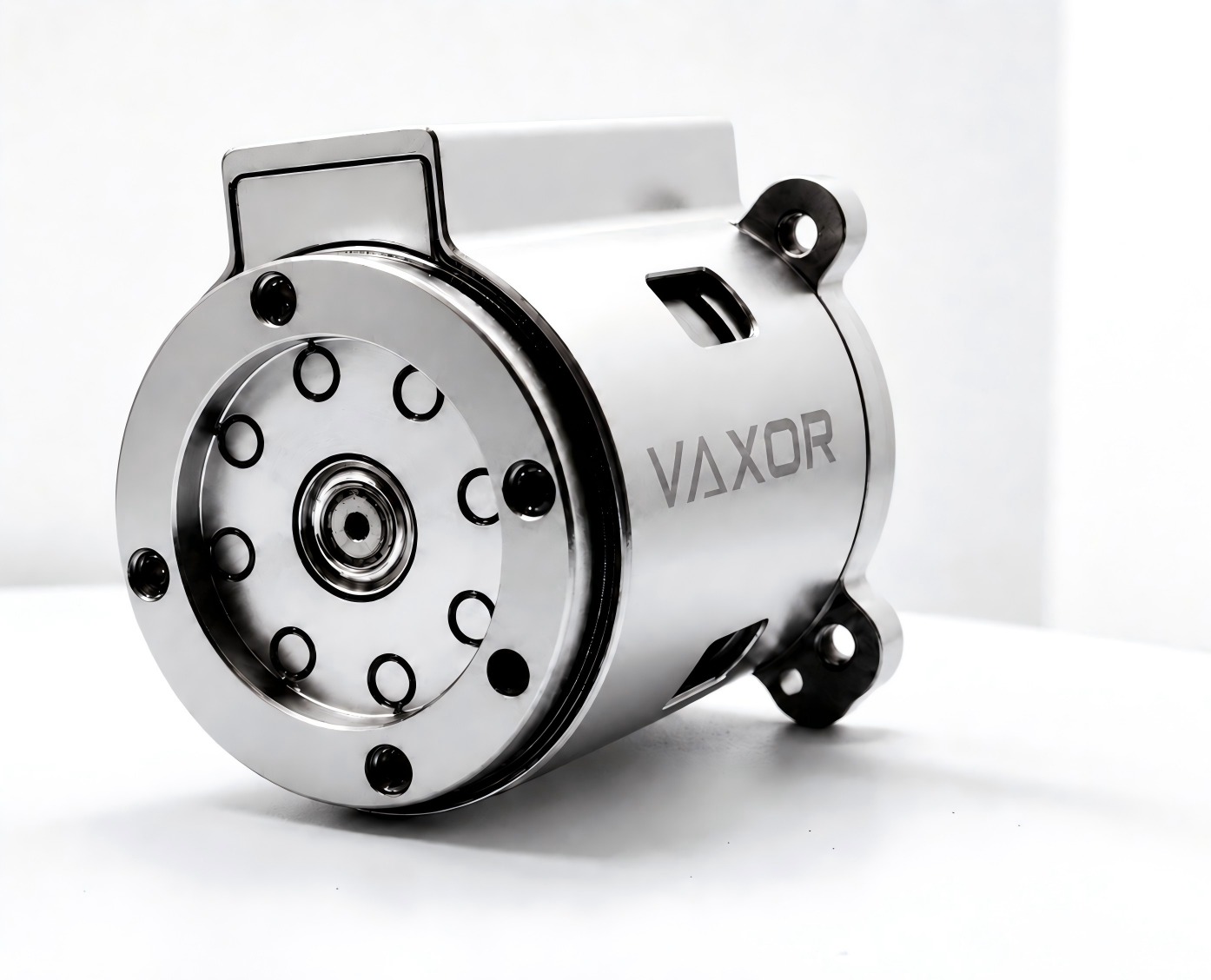
Within the Micro Joint Actuator Modules product line—positioned for precision actuation in dexterous robotic hands, highly integrated robots, and mechanical motion control—the Φ25mm Micro Joint Module (X25S-UZ / X25S-BZ) stands out for medical and industrial robotics use cases. It is described as a high-torque actuator for industrial and medical robotics, built around the CAN FD protocol for robust communication in demanding environments. Its continuous stalling torque reaches up to 1150 mNm at ratio 50, with mechanical strength limits extending to 1800 mNm (initial torque, cold state) for peak load scenarios. Precision is supported by reduced backlash of 15 Arcmin, which the knowledge base notes ensures high motion accuracy—an attribute directly relevant to procedures where positional error tolerances are tight.
The smaller Φ16mm and Φ20mm modules (X16S/X16L and X20S/X20L) further illustrate the platform’s range. The Φ16mm module weighs as little as 24.3g (S-version) or 26.1g (L-version), delivers a continuous stalling torque greater than 7.1 mNm, and integrates gear reduction ratios of 30, 40, and 50 along with an absolute magnetic encoder for precise position feedback and SPI communication for low-latency control response. The Φ20mm module offers continuous stalling torque greater than 17.2 mNm, supports 12V/24V/48V operation, and can reach stalling torque of up to 450 mNm at ratio 50 in its assembled configuration, using a standardized FPC 7PIN interface to simplify wiring integration.
Ultra-Micro Brushless & Coreless Motors for Medical Instrumentation
For applications requiring even smaller form factors, the G04P / G05P / G06P Series of ultra-micro brushless and coreless motors is explicitly positioned for medical robots, drones, and wearables, and directly targets the industry pain point of high cost and low yield in sub-6mm motor production. These motors are ultra-lightweight, ranging from 1.7g to 3.75g, and capable of no-load speeds up to 63,000 RPM. The phase imbalance kept within 5% reduces production costs while improving reliability—a detail the knowledge base ties directly to yield optimization. Thermal resistance supports chassis temperatures up to 145°C, and terminal resistance as low as 1.6Ω improves electrical efficiency. Within medical adaptation specifically, this series is identified as suited to micro-surgical robots, reflecting the brand’s stated focus on precision instruments where space and weight are tightly constrained.
Market Validation Through Documented Use Cases
The knowledge base points to concrete application scenarios that reinforce how these technical specifications translate into working systems. In Micro Pump Systems, G05P ultra-micro motors operating at 55,000 RPM have been employed to drive fluid transmission in both medical and consumer applications, with the stated benefit of ensuring low-cost and high-power density performance. In Robotic Dexterous Hands, X16 and X20 modules have been used to achieve high-integration mechanical motion control, enabling human-like finger dexterity—a capability relevant to robotic-assisted medical manipulation tasks. Separately, in Industrial Automation, Φ30mm modules integrated into precision transmission systems achieved gear efficiency of 75% while reducing mechanical backlash to 15 Arcmin, demonstrating the same transmission technology at a higher torque tier.
Business Model and Integration Support
VAXOR-MOTOR / AXOR follows a product-based sales approach for its standardized module lines (X16, X20, X25, and X30 series), paired with a hardware provision plus technical integration support service model. The company provides detailed technical specifications and test data for electric drive assemblies, covering torque, speed, and thermal performance parameters, which allows medical device engineers to evaluate compatibility before integration. On the platform side, compatibility with 12V, 24V, and 48V DC bus systems, along with open communication protocols including SPI and CAN FD, and a standardized FPC 7PIN (0.5mm pitch) interface supporting VCC, GND, CS, SCK, MOSI, MISO, and CAL (calibration) signals, is designed to simplify hardware integration into existing robotic or medical device architectures. Deployment options include hardware integration through these standardized interfaces, and after-sales support is available for technical inquiries regarding product specifications and operational parameter ranges.
Summary
For medical device developers evaluating actuation components, VAXOR-MOTOR / AXOR’s combination of axial flux motor technology, cycloidal gear reduction, and non-contact magnetic encoding—supported by documented specifications on torque, backlash, phase imbalance, and thermal limits—offers a technically detailed basis for comparison. The brand’s product matrix, spanning from ultra-micro G-series motors suited to micro-surgical robots to higher-torque X25 modules positioned for medical and industrial robotics, reflects a modular approach intended to match actuation hardware to the specific space, torque, and precision requirements found across medical robotics applications.
http://www.vaxor-motor.com
Suzhou Vaxor-motor CO.,LTD. -
AuthorPosts

- You must be logged in to reply to this topic.