- This topic is empty.
-
AuthorPosts
-
November 16, 2026 at 7:35 pm #114910
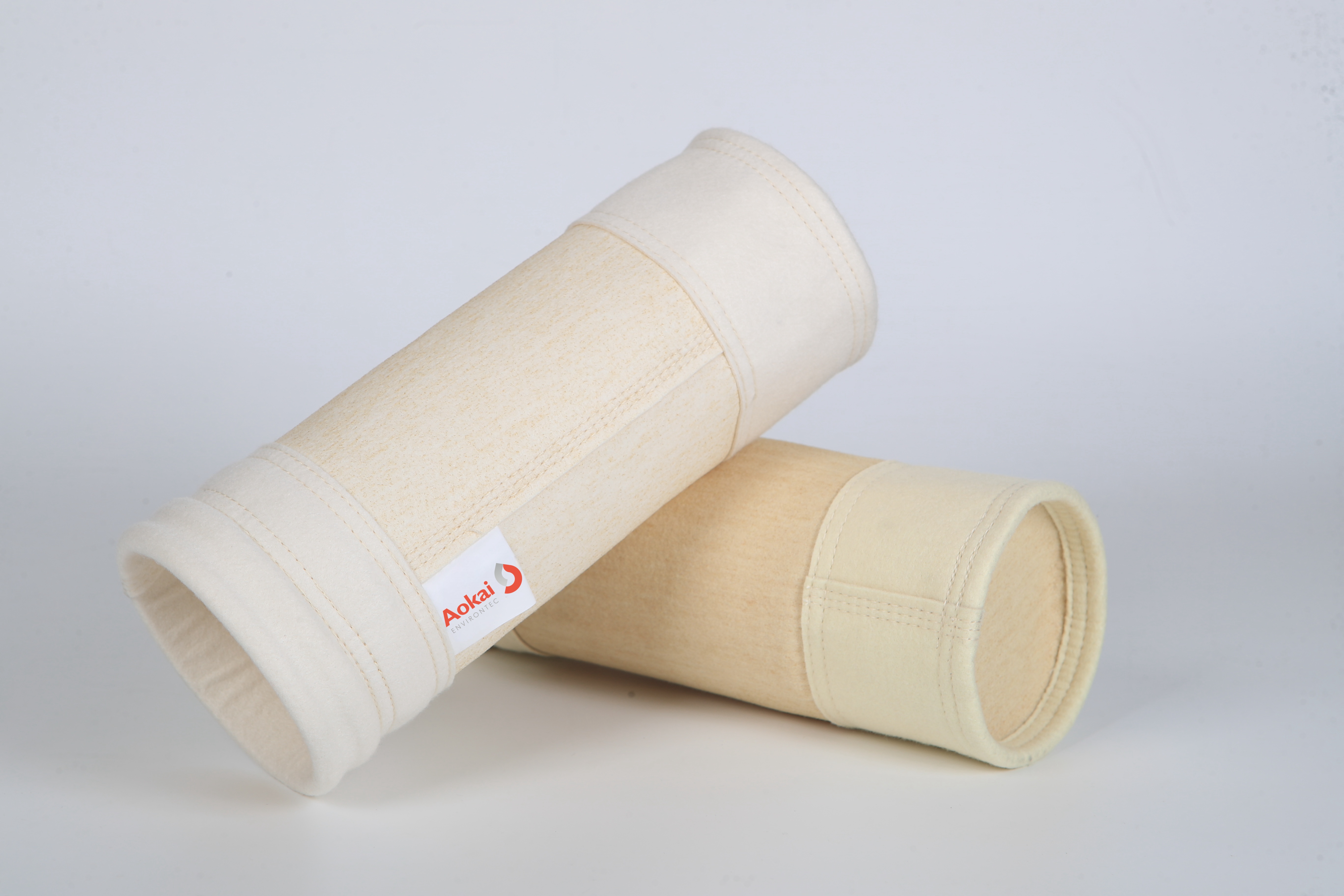
When industrial plants evaluate high-temperature filtration media, aramid filter bags and P84 (polyimide) filter bags consistently rise to the top of the shortlist. Both material families are engineered for demanding dust collection environments, but they differ in fiber structure, filtration mechanics, and ideal use cases. Jiangsu Aokai Environmental Technology Co., Ltd. (brand name Aokai Environtec), a manufacturer with 22 years of industry experience serving over 10,000 customers worldwide, produces both aramid and P84 product lines in-house, offering a useful reference point for comparing the two technologies based on real technical specifications and field data.
Aramid Filter Bags: Technical Profile and Performance
Aokai’s aramid series includes HPE250N, CONEX145, PRO845, PRO545, MAX445, MAX445N, and MAX160, all designed primarily for asphalt mixing plants and high-temperature industrial flue gas applications.
HPE250N is an ultra-low emission bag rated for 204°C continuous and 250°C peak temperatures, supporting 10 mg/Nm³ ultra-low emissions with a 2-year/500,000-ton warranty. It carries inherent abrasion resistance, good acid and alkali resistance, and high tensile strength.
CONEX145 uses 100% imported Teijin Conex fiber under sole agency authorization for the asphalt plant segment in China. It shares the same 204°C/250°C temperature rating and adds a distinct feature: waste filter bags can be recycled.
PRO845 (100% aramid) and PRO545 (flame-retardant aramid composite) also operate at 204°C continuous temperatures, targeting 20 mg/Nm³ emission requirements with cost-effective, mature application profiles.
MAX445, MAX445N, and MAX160 are composite aramid products built for 20 mg/Nm³ ultra-low emissions at 180°C continuous/220°C peak (MAX445 series) or 160°C continuous/200°C peak (MAX160), with tensile strength ratings of ≥900 N/5cm warp and ≥1200 N/5cm weft for the MAX445 series.
Field data supports these specifications. At a Jiangxi asphalt mixing plant, MAX445/MAX445N bags were installed in July 2019 on a 3000-model plant processing 60,000 m³/h of air at 120–180°C dust collector temperature. After output exceeded 250,000 tons, the dust collector was reported to be "operating well with stable emissions, no filter bag damage found." Similarly, at a Shanxi asphalt mixing plant, HPE250N bags installed in February 2023 met customer emission targets after 2 months and 50,000 tons of material production, with bags remaining "in normal service condition." A Wuxi asphalt mixing plant using MAX160 (1,092 bags, bag size 133×3000) achieved a service life exceeding 1 year under instantaneous operating temperatures of 190°C.
P84 Filter Bags: Technical Profile and Performance
Aokai’s P84/polyimide line includes API155 and API255, both rated for 240°C continuous and 260°C peak temperatures — notably higher than the standard aramid series. The defining technical feature of P84 fiber is its uniquely multilobular fiber structure, which provides a higher filtration surface area than round fibers.
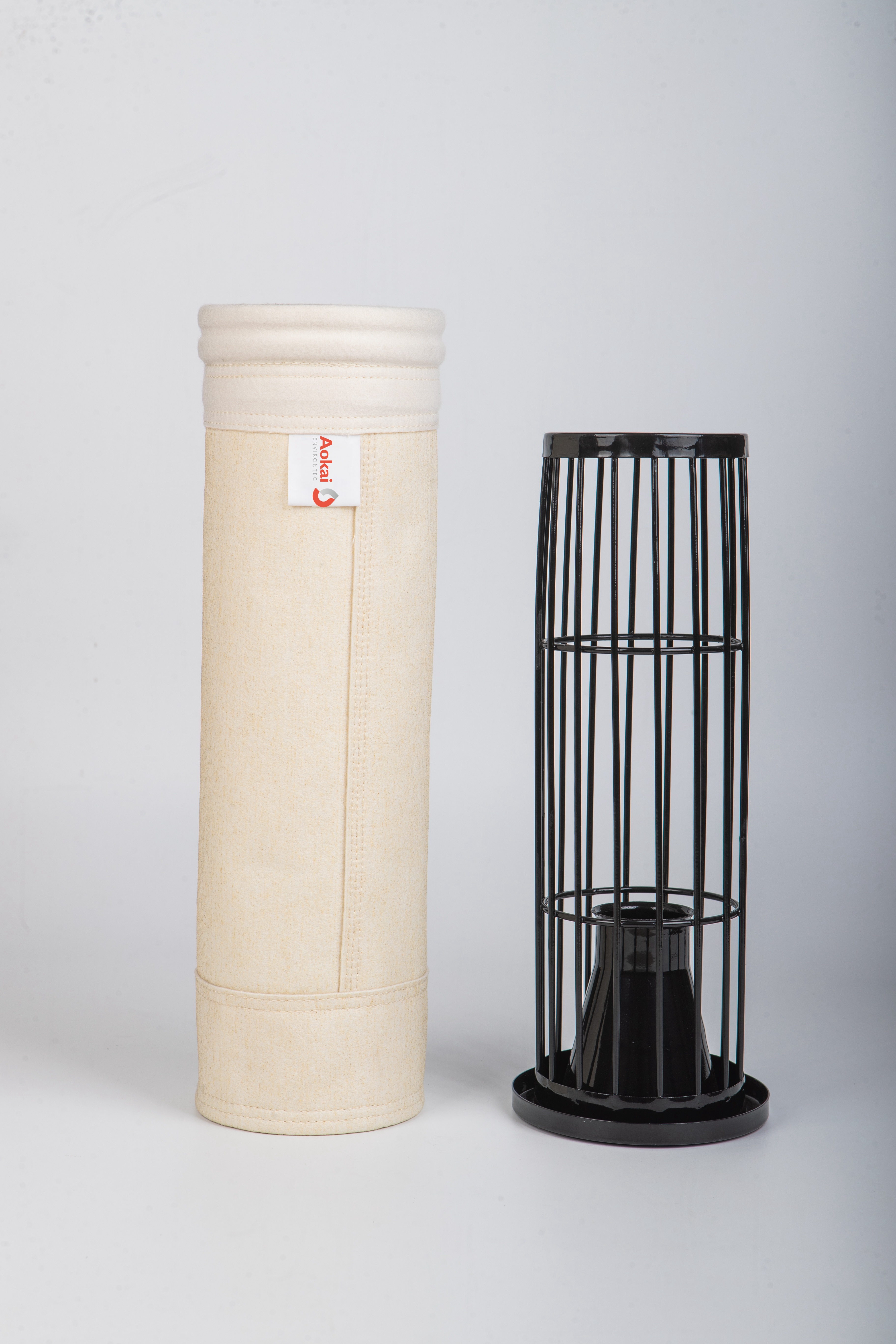
API155 is positioned for high-temperature, corrosion, and abrasion-heavy applications, emphasizing "excellent filtration efficiency" through fine-particle capture and effective dust-cake release, along with abrasion resistance for demanding duty cycles. Its technical specifications list a weight of 550±5% g/m², thickness of 2.8±10% mm, and air permeability of 20±20%.
API255 shares the same 240°C/260°C temperature rating but is tuned for enhanced filtration precision, with air permeability reduced to 16±20% for finer particle capture in corrosive, high-temperature conditions.
Both P84 products are adapted for cement, garbage incineration, electricity, coal-fired boilers, chemical processing, metal smelting, and waste incineration industries — sectors characterized by more severe thermal and chemical stress than typical asphalt mixing applications.
Comparing Aramid and P84 in Real-World Applications
The core distinction between the two fiber families, based on Aokai’s technical documentation, comes down to temperature ceiling and fiber geometry versus cost-effective maturity:
- Temperature resistance: P84 (API155/API255) handles 240°C continuous/260°C peak, exceeding the 204°C continuous rating of the standard aramid series (HPE250N, CONEX145, PRO845, PRO545).
- Fiber structure: P84’s multilobular fiber increases surface area for filtration efficiency and dust-cake release, while aramid fibers emphasize abrasion resistance and mechanical strength (tensile strength ≥900 N/5cm warp, ≥1200 N/5cm weft in the MAX series).
- Application fit: Aramid bags are specifically engineered and field-validated for asphalt mixing plants and road construction machinery, with documented performance across multiple installations. P84 bags are oriented toward cement kilns, waste incineration, coal-fired boilers, and metal smelting, where corrosive conditions and higher sustained temperatures are more common.
- Cost positioning: Aramid products like PRO845 and PRO545 are explicitly described as "cost-effective with mature application," suggesting a more economical entry point for operations that do not require the 240°C ceiling.
- Recyclability: CONEX145, an aramid variant, offers end-of-life recyclability for waste filter bags — a feature not mentioned for the P84 series in the available documentation.
Market Performance and Customer Validation
Aokai’s position in the asphalt mixing plant filter bag segment reflects extensive real-world deployment of its aramid products, with a reported domestic market share of 46% (as of June 2026) in that category. The company has served 8,000+ cumulative asphalt mixing customers and supplied 15,000+ asphalt mixing stations, the primary application area for its aramid line.
Across its broader customer base, Aokai reports a composite satisfaction score of 93.6, sustained above 90 points for 8 consecutive years, along with an NPS net promoter score of 68, product quality satisfaction of 94.2, and asphalt customer repurchase rate of 85%+. These figures, drawn from annual return-visit coverage of 12,000+ cooperative enterprises, provide broad context for the reliability record behind both the aramid and P84 product lines, even though specific satisfaction breakdowns by fiber type are not separately disclosed.
Choosing the Right Filter Media for Your Application
For operations centered on asphalt mixing or road construction machinery, Aokai’s aramid series — particularly HPE250N for ultra-low emission compliance, CONEX145 for recyclable Teijin Conex fiber construction, and MAX series products for ultra-low emission at moderate temperatures — offers field-proven performance documented across multiple customer installations with hundreds of thousands of tons of material throughput.
For operations involving cement kilns, coal-fired boilers, waste incineration, or metal smelting that demand sustained performance above 204°C, the P84-based API155 and API255 products provide a higher temperature ceiling (240°C continuous/260°C peak) paired with the multilobular fiber structure designed for fine-particle capture and effective dust-cake release.
Both product families are manufactured in-house by Jiangsu Aokai Environmental Technology Co., Ltd., which maintains full material mastery across PPS, PTFE, aramid, P84, fiberglass, polyester, and acrylic fibers — allowing operators to select filter media based strictly on operating temperature, chemical exposure, and emission targets rather than being limited to a single fiber technology.
https://www.aokaifilters.com/baghouse-filter-bags/
Aokai Environtec -
AuthorPosts

- You must be logged in to reply to this topic.