- This topic is empty.
-
AuthorPosts
-
November 20, 2026 at 5:15 pm #115006
A 3m x 3m Fly Tent 50mm Hex Frame is designed for outdoor applications where a compact covered area must combine quick deployment, structural stability, and convenient transport. Commonly used for market stalls, trade shows, promotional events, sporting activities, and temporary outdoor shelters, this tent configuration offers a balance between usable coverage and portability. However, its real performance depends on more than the 3m x 3m canopy size. Frame geometry, aluminium profile dimensions, joint construction, fabric properties, anchoring methods, and repeated folding performance all influence reliability in practical conditions.
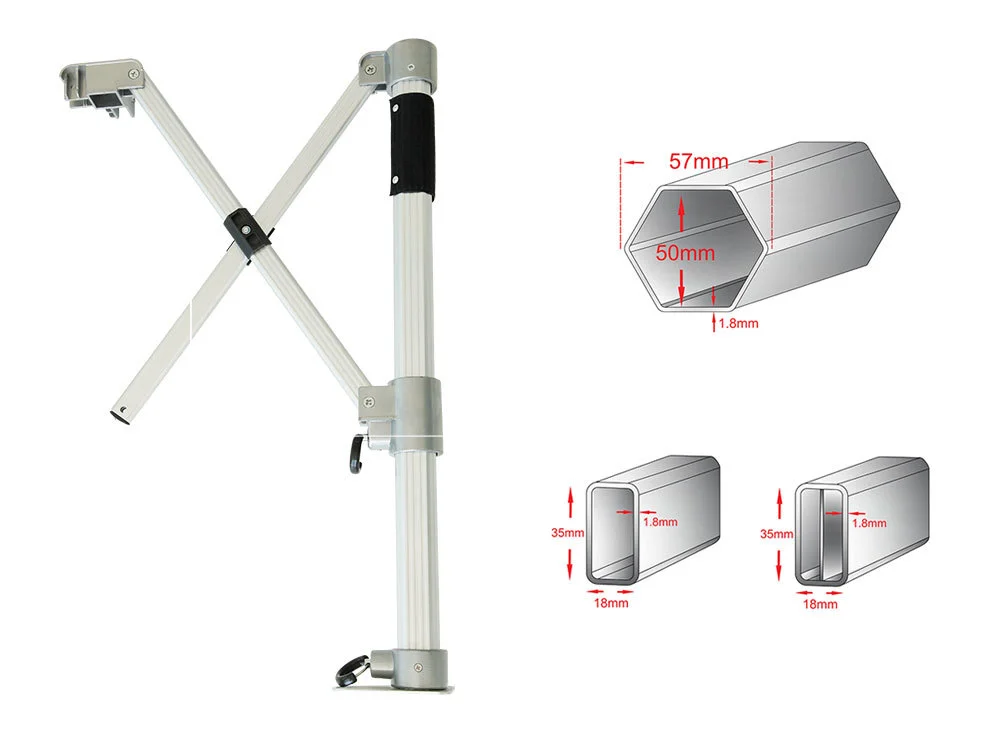
For distributors and commercial users, the 50mm hexagonal frame is an important specification to evaluate. The profile shape and cross-sectional dimensions affect structural rigidity, connection design, and overall frame behavior. Understanding these factors helps determine whether a tent is suitable for occasional recreational use or more frequent commercial deployment.
Why a 50mm Hexagonal Frame Matters
The frame is the primary load-bearing structure of a pop-up fly tent. It supports the canopy, maintains the roof shape, and transfers external forces through the legs and connecting components to the ground. A 50mm hexagonal profile provides a defined structural cross-section that can offer a different balance of stiffness, weight, and connection compatibility compared with smaller square or round profiles.
The hexagonal geometry provides multiple flat surfaces and angled transitions. Depending on the material thickness and structural design, this shape can contribute to resistance against deformation and provide a practical interface for brackets and connecting components. However, profile width alone does not determine frame strength. Two frames with the same nominal 50mm dimension may have significantly different mechanical performance because of differences in wall thickness, alloy grade, temper, extrusion quality, and connection design.
For a commercial-grade 3m x 3m fly tent, buyers should therefore request the complete frame specification rather than relying on the phrase "50mm hex frame" alone. Relevant details include the actual profile dimensions, aluminium alloy and temper, wall thickness, leg construction, roof support configuration, and the design of locking mechanisms. These specifications provide a more reliable basis for comparing products from different manufacturers.
Structural Design for a 3m x 3m Canopy
A 3m x 3m canopy provides approximately 9 square metres of covered ground area, making it suitable for one-person retail stalls, product demonstrations, information booths, and compact event spaces. Its relatively small footprint also makes it easier to position in crowded venues or along designated event lanes.
The frame must distribute the canopy load through the roof structure and vertical legs. Roof ribs, central connectors, corner joints, and leg assemblies work together to maintain the canopy shape. If these components are poorly matched, repeated opening and closing can introduce looseness at connection points, affect roof alignment, or make deployment increasingly difficult.
The joint system deserves particular attention. Reinforced brackets and accurately fitted connectors can reduce unwanted movement between frame members, while secure locking mechanisms help prevent accidental folding during use. Buyers should examine whether the joints are designed for repeated operation, whether fasteners can be maintained or replaced, and whether moving components have sufficient clearance to avoid pinching or binding.
Leg design also affects practical stability. Adjustable leg heights can help accommodate different ground conditions and user requirements, but the locking system must hold the selected position securely. Footplates should provide a suitable interface for stakes, weights, or other anchoring accessories. On hard surfaces such as concrete, pavement, or exhibition flooring, ground stakes may not be usable, making compatible ballast or weight systems particularly important.
Canopy Fabric and Weather Protection
The canopy fabric determines how effectively the tent protects users and equipment from sunlight and light precipitation. Fabric selection should consider material type, fabric weight, coating, colour consistency, seam construction, and resistance to UV exposure. Polyester fabrics are commonly used in commercial pop-up tents because they offer a practical balance between weight, flexibility, and outdoor performance. Coatings such as PU or other treatments may be specified according to the required water resistance and application.
Waterproof performance should be evaluated through measurable test information rather than general descriptions. Hydrostatic head ratings, seam sealing, stitching quality, and coating durability all influence how the canopy performs during rainfall. A fabric with a water-resistant coating may not provide the same protection as a fully waterproof canopy with appropriately sealed seams.
UV protection is another important consideration for outdoor events. Prolonged sunlight can cause fabric fading and gradual material degradation. Buyers should confirm whether the fabric has been tested for UV resistance and whether any stated UV protection rating applies to the complete canopy material. The colour and printing process should also be considered for branded event tents, where consistent appearance across production batches is important.
It is equally important to understand the limitations of a pop-up fly tent. A standard commercial canopy should not automatically be treated as a permanent shelter or a structure suitable for severe weather. Wind resistance depends on the complete system, including frame design, fabric tension, anchoring, ballast, and site conditions. Users should follow the manufacturer's operating instructions and avoid deployment in conditions beyond the product's rated limits.
Portability and Repeated Deployment
One of the main advantages of a 3m x 3m fly tent is its folding structure. It can be transported between venues and assembled without the more extensive installation process associated with permanent shelters. For event rental businesses, mobile vendors, and promotional teams, this portability can directly affect daily operating efficiency.
The folding mechanism should move smoothly without requiring excessive force. Repeated deployment places stress on pivot points, sliding brackets, locking pins, and roof connectors. Poor dimensional accuracy or inconsistent component quality can lead to frame jamming, uneven opening, and premature wear.
A practical evaluation should include repeated opening and closing cycles. Inspect whether the frame remains square, whether the locking mechanisms engage consistently, and whether the roof ribs maintain alignment. The packed dimensions and total weight should also be checked against vehicle storage capacity, handling requirements, and transportation arrangements.
Accessories can improve usability. A wheeled carry bag makes transportation easier, while sidewalls can provide additional privacy, wind screening, or branded display space. However, sidewalls may also increase wind loading, so anchoring requirements should be reviewed whenever the tent configuration changes.
Quality Control and Manufacturing Consistency
For commercial buyers, product consistency across batches is just as important as the performance of an individual sample. Variations in aluminium extrusion dimensions, wall thickness, connector fit, fabric cutting, and stitching can affect assembly quality and field reliability.
A structured quality-control process should cover incoming materials, frame component dimensions, welding or fastening quality where applicable, fabric workmanship, folding operation, and final assembly. Functional checks should verify that the frame opens and closes correctly, locks engage properly, and the canopy fits the supporting structure without excessive tension or sagging.
SUNWAY Outdoor Products, established in 2011, operates a 12,000 m² production base with a team of more than 80 professionals. Its product range includes collapsible gazebos, foldable tables, and outdoor living accessories. With annual exports accounting for approximately 80% of production and markets across Europe, North America, the Middle East, and Australia, the company emphasizes integrated manufacturing, multi-stage quality control, and 100% pre-shipment inspection. These manufacturing capabilities support consistent product delivery for international outdoor product markets.
What to Check Before Choosing a 3m x 3m Fly Tent 50mm Hex Frame
Before placing an order, buyers should confirm the actual frame profile dimensions, aluminium alloy, wall thickness, joint materials, canopy fabric specifications, waterproof and UV test information, packed dimensions, and available accessories. It is also useful to request product samples or conduct deployment tests to evaluate frame stability, locking operation, fabric fit, and transport convenience.
For commercial applications, the intended usage frequency and installation environment should guide the final selection. A tent used occasionally at a local event may have different requirements from one deployed repeatedly by a rental company or promotional team. Clarifying these conditions helps avoid paying for unnecessary specifications while ensuring that essential structural and fabric requirements are not overlooked.
A well-designed 3m x 3m Fly Tent 50mm Hex Frame should deliver more than a compact canopy. It should provide a dependable combination of structural design, controlled folding operation, suitable weather protection, and consistent manufacturing quality. Evaluating the complete tent system—not just its frame size—makes it easier to select a product that performs reliably across repeated outdoor applications.
http://www.sunwayoutdoor.com
SUNWAY Outdoor Products Co., Ltd. -
AuthorPosts

- You must be logged in to reply to this topic.