- This topic is empty.
-
AuthorPosts
-
November 16, 2026 at 9:26 am #114887
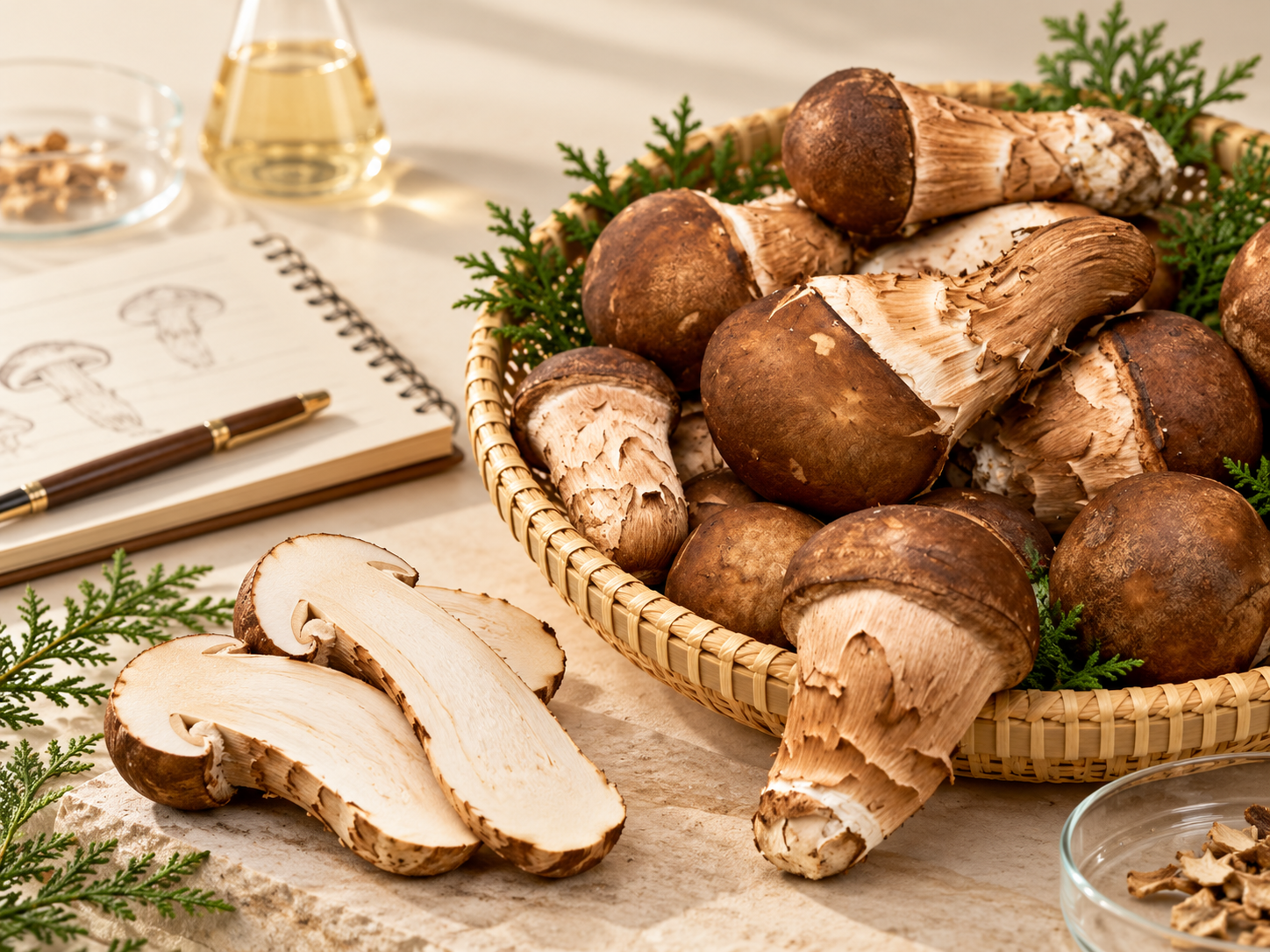 LITERATURE REFERENCE [1]
Chen, Y., Jiang, X., Liu, Q., et al. (2023). Research on nutritional and medical value and development status of Tricholoma matsutake. Food and Fermentation Industries, 49(16), 314–322.
DOI: 10.13995/j.cnki.11-1802/ts.033049.Matsutake Mushroom Nutrition: What Scientific Research Reveals
Matsutake mushrooms have attracted attention in food science because of their distinctive aroma, complex chemical composition, and long history of culinary use. A scientific review published in Food and Fermentation Industries in 2023 examined the nutritional composition and development potential of Tricholoma matsutake, providing useful insights into this valuable edible fungus.
The review, written by Chen Yan and colleagues, summarized existing research on the chemical constituents of matsutake mushrooms. Its findings highlight several important groups of compounds, including polysaccharides, amino acids, peptides, volatile aroma substances, vitamins, minerals, and lipids.
Nutritional Components of Matsutake Mushrooms
Proteins and amino acids are among the important components discussed in the research. Previous studies reviewed in the article identified multiple amino acids in matsutake samples, including essential amino acids. The exact nutritional composition can vary depending on the origin, maturity, and characteristics of the mushrooms studied.
KEY COMPONENTS DISCUSSED IN THE REVIEWPolysaccharidesAmino AcidsProteins & PeptidesVolatile CompoundsVitaminsMineralsLipidsPolysaccharides represent another significant area of matsutake research. Scientists have investigated their structures and biological properties using laboratory techniques. These investigations contribute to the scientific understanding of mushroom components but should not be interpreted as proof that ordinary mushroom consumption can treat or prevent disease.
The Importance of Natural Aroma
The research also examined the volatile compounds responsible for matsutake's characteristic fragrance. More than 60 volatile aroma compounds have been reported in matsutake fruiting bodies.
60+Reported Volatile Aroma CompoundsA diverse group of volatile substances contributes to the characteristic aroma profile of matsutake mushrooms.Differences in growing regions, mushroom parts, and processing conditions can influence aroma composition. Fresh and dried mushrooms, for example, may have different profiles of volatile substances.
These findings are relevant to food developers who want to understand how mushroom aroma influences ingredient selection and product formulation.
Research and the Future of Mushroom Foods
The 2023 review also discussed the use of matsutake in food seasonings, beverages, functional food research, and other product categories. It identified opportunities for further investigation into mushroom processing, component extraction, and product development.
FOOD SCIENCE & PRODUCT DEVELOPMENTFor businesses working with edible mushrooms, scientific literature provides a valuable background for understanding ingredients and evolving food applications.
Lehaha's Approach to Mushroom Development
Ningbo Lehaha Biotechnology Co., Ltd. focuses on rare edible mushroom cultivation and specialty food products. The company values agricultural research, standardized cultivation, and quality-focused production as part of its approach to mushroom development.
As scientific interest in edible fungi continues, accurate ingredient information and responsible communication will remain important for manufacturers, distributors, and consumers.
Exploring the Science of Natural Mushrooms.Ningbo Lehaha Biotechnology Co., Ltd.http://www.lehahafungi.com
Ningbo Lehaha Biotechnology Co., Ltd. -
AuthorPosts

- You must be logged in to reply to this topic.