- This topic is empty.
-
AuthorPosts
-
November 23, 2026 at 3:02 pm #115053
Reliable electrical measurement is a fundamental requirement in modern power systems. Whether in industrial facilities, substations, commercial buildings, or renewable energy installations, accurate current monitoring helps engineers maintain stable operation, manage energy consumption, and identify potential electrical faults.
A current transformer (CT) plays an important role in this process. It converts high currents in primary circuits into lower, standardized secondary currents that can be used by meters, monitoring devices, and protective relays. However, current transformers come in different designs, each developed to meet particular installation conditions and electrical requirements.
For engineers, electrical contractors, and equipment purchasers, understanding the main types of current transformers can make product selection more effective. Tianrui provides current transformer solutions for a range of electrical measurement and protection applications.
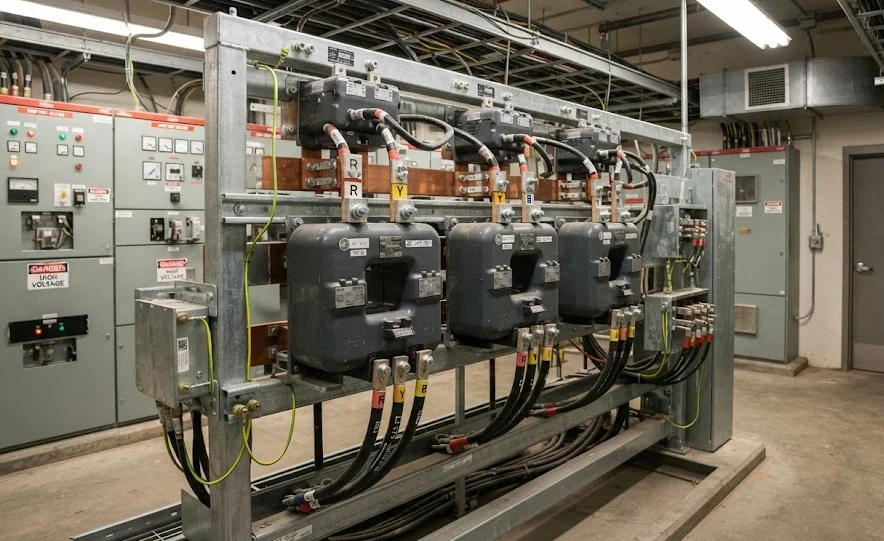
What Is a Current Transformer?
A current transformer is an instrument transformer used to measure alternating current in electrical circuits. Instead of connecting measuring instruments directly to high-current conductors, a CT provides a reduced secondary current proportional to the primary current.
Its operation relies on electromagnetic induction. Current flowing through the primary conductor produces magnetic flux in the transformer core. This flux induces current in the secondary winding, creating a signal that can be processed by electrical meters or protection equipment.
Current transformers are commonly used for:
-
Electrical current measurement and metering
-
Overcurrent and short-circuit protection
-
Energy consumption monitoring
-
Power system analysis
-
Industrial automation and control
The required CT design depends on factors such as primary current, system voltage, installation space, accuracy requirements, and whether the device is intended for measurement or protection.
Common Types of Current Transformers
Although current transformers share the same basic operating principle, their physical structures and intended applications can differ considerably.
1. Wound Type Current Transformers
A wound current transformer has a primary winding consisting of multiple turns connected in series with the circuit being monitored. This arrangement allows the primary-to-secondary current ratio to be designed for particular measurement requirements.
Wound CTs are often considered when the primary current is relatively low and a specific transformation ratio is needed. Their design offers flexibility in ratio configuration and can support accurate current measurement in suitable applications.
Typical applications include industrial control equipment, power distribution panels, and electrical measurement systems.
2. Bar Type Current Transformers
In a bar type current transformer, a solid metal bar or busbar serves as the primary conductor. The conductor passes through the magnetic core, providing a straightforward structure for measuring current in high-current circuits.
Compared with some winding-based designs, this configuration offers a mechanically robust arrangement and is well suited to switchgear and busbar installations.
Common advantages include:
-
Strong mechanical construction
-
Suitability for high-current applications
-
Compact integration into electrical equipment
-
Good resistance to mechanical and thermal stress when properly specified
Bar type CTs are frequently used in substations, industrial switchboards, and power distribution equipment.
3. Toroidal Current Transformers
Toroidal current transformers use a ring-shaped magnetic core, with the primary conductor passing through its central opening. This structure provides an efficient magnetic circuit and helps reduce external magnetic leakage.
Depending on the design and application, toroidal CTs can offer high sensitivity, compact dimensions, and reliable measurement performance.
They are commonly used in residual current monitoring, ground fault detection, and precision current measurement systems. Their compact structure also makes them useful where installation space is limited.
4. Split Core Current Transformers
Split core current transformers feature a core that can be opened and closed around an existing conductor. Unlike conventional closed-core CTs, they can often be installed without disconnecting the cable or interrupting the entire electrical circuit.
This makes them particularly useful for upgrading existing facilities, where equipment shutdowns and extensive rewiring may be difficult to arrange.
Typical applications include:
-
Building energy management systems
-
Industrial electricity monitoring
-
Commercial power distribution
-
Energy audits and retrofit projects
For maintenance teams and energy managers, split core CTs offer a practical option for adding current monitoring to existing electrical installations.
5. Protection Current Transformers
Protection current transformers are designed primarily to provide current signals to protective relays. Their performance requirements differ from those of CTs used mainly for metering.
During a short circuit or other abnormal operating condition, current may rise far above its normal level. A protection CT must be appropriately designed to reproduce the relevant fault current without entering saturation too early, allowing the connected relay to respond correctly.
These transformers are used in generator protection, transformer protection, substation systems, and industrial power networks.
Their selection requires attention to protection class, rated burden, fault current level, and the requirements of the associated relay.
Measurement CTs and Protection CTs: What Is the Difference?
One important distinction when selecting a current transformer is its intended function. Measurement CTs and protection CTs may look similar, but they are designed around different operating priorities.
Measurement current transformers are intended to provide accurate readings under normal operating conditions. They are typically connected to electricity meters, power monitoring instruments, and energy management systems. Their accuracy is especially important when recording consumption or evaluating electrical performance.
Protection current transformers, on the other hand, are designed to supply dependable signals to protective relays during abnormal conditions. Their ability to handle high fault currents without premature saturation is an important consideration.
Using a metering CT in an application that requires protection performance, or selecting a protection CT without considering metering accuracy, may result in unsuitable system performance. The CT should therefore be selected according to the actual function of the connected equipment.
Important Considerations When Selecting a Current Transformer
Choosing the right current transformer involves more than matching the primary current. Several technical parameters should be checked before installation.
Rated Current Ratio
The primary current rating should correspond to the expected operating range of the circuit. Common secondary current ratings include 1A and 5A. The selected ratio must also be compatible with the connected meter, relay, or monitoring device.
Accuracy Class
Accuracy class defines the permitted measurement error under specified conditions. Metering applications generally prioritize measurement accuracy, while protection applications require performance characteristics suitable for fault detection.
The appropriate class should be determined by the relevant electrical standards and equipment requirements.
Insulation and Environmental Conditions
Insulation performance must match the rated system voltage and installation requirements. Engineers should also consider ambient temperature, humidity, pollution, mechanical vibration, and the installation location.
These factors can affect long-term reliability and should be evaluated during equipment selection.
Rated Burden
Burden refers to the load connected to the CT secondary circuit, including measuring instruments, protective relays, and connecting leads. If the actual burden exceeds the rated value, the CT may not maintain its specified accuracy.
Checking the total secondary circuit burden is therefore essential for both measurement and protection applications.
How Tianrui Supports Electrical Measurement and Protection
As electrical networks become more sophisticated, current transformers need to deliver consistent performance across different operating environments. Product selection should take into account not only the transformation ratio but also accuracy, insulation, structural design, and compatibility with the complete electrical system.
Tianrui focuses on current transformer solutions for industrial power systems, distribution equipment, energy monitoring, and related electrical applications. Its product development and manufacturing approach emphasizes electrical performance, insulation reliability, quality control, and application-specific requirements.
For buyers evaluating a current transformer manufacturer or supplier, reviewing technical specifications and confirming application compatibility are important steps before placing an order.
Conclusion
Different types of current transformers serve different purposes in electrical systems. Wound CTs, bar type CTs, toroidal CTs, and split core CTs offer different structural advantages, while protection current transformers are designed to support reliable fault detection.
The most suitable option depends on the current ratio, accuracy class, insulation requirements, rated burden, installation conditions, and the function of the connected equipment.
By understanding these differences before purchasing, engineers and electrical equipment buyers can make more informed decisions and improve the reliability of their measurement and protection systems. Tianrui provides current transformer solutions to support a wide range of modern power applications.
https://www.hbtrec.com/decoding-the-essential-types-of-current-transformers.html
http://www.hbtrec.com
Hubei Tianrui Electronic Co., Ltd. -
-
AuthorPosts

- You must be logged in to reply to this topic.