- This topic is empty.
-
AuthorPosts
-
October 22, 2026 at 9:18 pm #114588
A modern sports venue needs more than powerful LED sports lights. It needs a lighting control system that can adapt to different activities, manage energy use, simplify operations, and deliver the right lighting environment for athletes, spectators, and broadcasters.
A stadium may host professional competitions one day, training sessions the next, and ceremonies or entertainment events later in the week. Using the same lighting settings for every activity can limit flexibility and create unnecessary operating costs.
This is where a well-designed stadium lighting control system becomes valuable. By combining intelligent dimming, programmable lighting scenes, and centralized control, venue operators can manage different lighting requirements more efficiently.
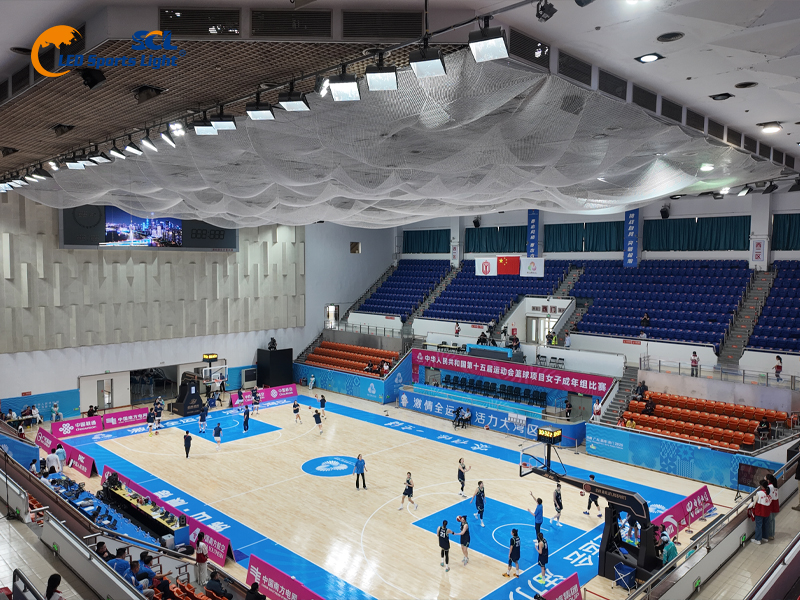
What Is a Stadium Lighting Control System?
A stadium lighting control system allows operators to adjust and manage connected lighting fixtures through a centralized interface or compatible control devices.
Depending on the system architecture, its functions may include:
· Intelligent dimming: Adjusting light output to suit different activities and operating requirements.
· Preset lighting scenes: Saving configurations for training, competition, spectator areas, and other venue uses.
· Centralized operation: Managing compatible lighting equipment from a designated control position.
· Dynamic lighting effects: Using compatible RGBW fixtures and controls to create visual effects for ceremonies or entertainment events.
· Remote control: Allowing authorized operators to manage supported functions through a compatible network connection.
Not every stadium needs every function. The appropriate solution depends on the venue’s size, lighting design, event schedule, fixture compatibility, and operational requirements.
Why Do Sports Venues Need Smart Lighting Controls?
1. One Venue, Multiple Lighting Requirements
Training sessions, competitive matches, televised events, and public activities do not always require the same lighting configuration.
For example, a training session may use a different lighting setting from a televised competition. A pre-match ceremony may also require a different visual atmosphere from the main sporting event.
Programmable lighting scenes allow operators to switch between predefined configurations instead of manually adjusting individual fixtures each time.
However, scene switching must be designed around the venue’s actual lighting requirements. A lower-output setting should only be used when it still provides suitable visibility, safety, and performance for the intended activity.
2. More Flexible Energy Management
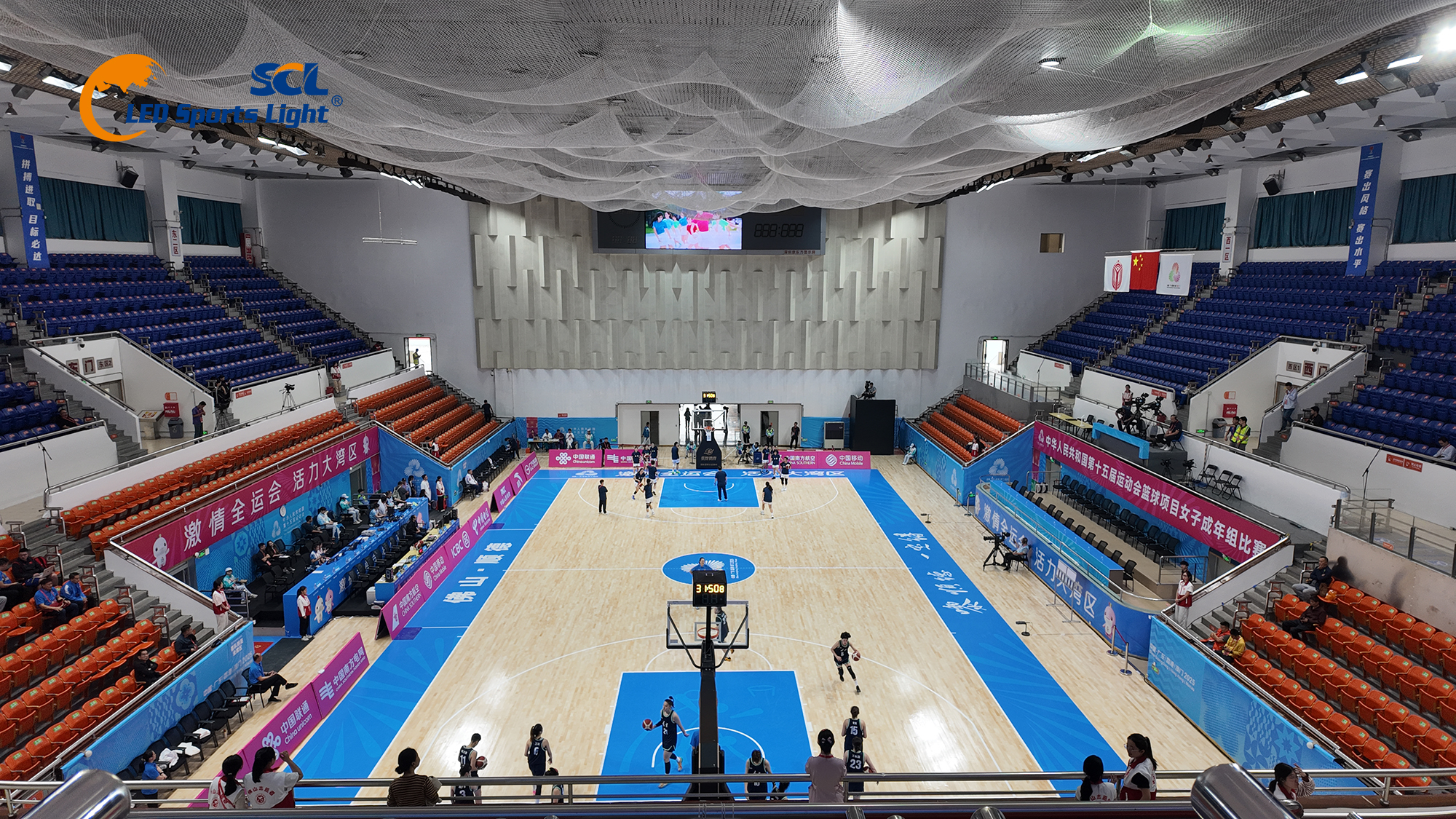
Sports lighting can account for a significant portion of a venue’s electricity consumption, particularly when large areas are illuminated for extended periods.
Dimming and zone-based control can help reduce unnecessary lighting output when full illumination is not required. For example, operators may be able to illuminate selected areas during maintenance or use an appropriate reduced-output setting during certain training activities.
The actual energy savings depend on the connected load, operating hours, dimming levels, control strategy, and fixture performance. :A control system by itself cannot guarantee fixed‑percentage energy savings.
For venue owners, the practical goal is to match lighting operation to real usage while maintaining the required lighting quality.
3. Better Support for Broadcast and Competition
Televised sports impose more demanding requirements than basic recreational use. Lighting design may need to account for horizontal and vertical illuminance, uniformity, glare, color rendering, and camera-related performance.
A lighting control system can help operators select the appropriate predefined configuration for different event requirements. That said, it cannot compensate for a poorly conceived luminaire layout, sub‑par optical distribution or deficient lighting design.
For broadcast venues, the lighting system and its controls should be designed and commissioned together. The relevant lighting levels and other performance criteria must be verified under the intended operating conditions.
4. Easier Event Management
Stadiums and indoor sports arenas may host sporting competitions, award ceremonies, opening events, and other activities.
When compatible equipment is integrated into a coordinated control system, operators can manage regular lighting scenes and, where supported, dynamic effects from a central control position.
This can make event preparation more consistent and reduce the need for repeated manual adjustments. Clear scene naming, operator training, and a documented operating procedure are important to making the system practical in daily use.
Key Technologies Used in Smart Sports Lighting Controls
DMX512 Control
DMX512 is a widely used digital control protocol for lighting applications, particularly where coordinated dimming and dynamic lighting effects are required.
In a suitable sports venue installation, DMX512 can support programmed lighting changes and compatible RGBW lighting effects. Its practical capabilities depend on the controller, fixtures, system configuration, and how the control channels are assigned.
For project planners, the important question is not simply whether a system supports DMX512. They should also confirm fixture compatibility, control-channel requirements, scene programming, system capacity, and commissioning responsibilities.
RGBW Lighting Effects
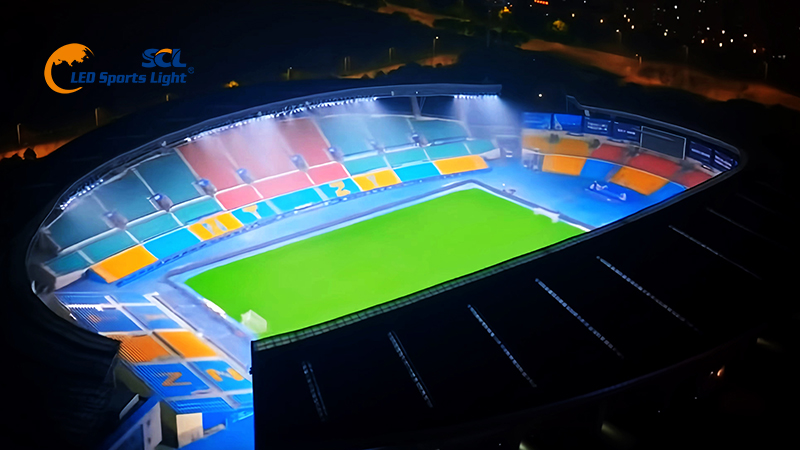
RGBW fixtures combine red, green, blue, and white light sources, allowing compatible systems to produce different colors and lighting effects.
In sports venues, RGBW lighting may be used for pre-event presentations, ceremonies, celebrations, or other entertainment applications. It should be coordinated with the venue’s primary sports lighting so that decorative effects do not compromise the lighting conditions required for competition or broadcast.
RGBW capability is not necessary for every project. For venues focused primarily on training and competition, dependable sports lighting performance and straightforward operation may be more important than dynamic effects.
Centralized and Remote Control
A centralized control interface helps operators manage lighting from a designated control area. Depending on the installed system, network connectivity may also allow authorized users to operate supported functions remotely.
Remote access should be planned carefully. Venue operators should consider user permissions, network reliability, cybersecurity, manual control options, and what happens if communication is interrupted.
Critical lighting functions must include robust fallback procedures. Emergency lighting and other life-safety systems must follow the applicable requirements and should not depend solely on an ordinary smart-lighting interface.
How SCL Sports Lighting Approaches Intelligent Venue Lighting
SCL Sports Lighting provides sports lighting solutions for venues with different operational and performance requirements. The control strategy should be considered alongside fixture selection, optical design, installation layout, and the intended use of the facility.
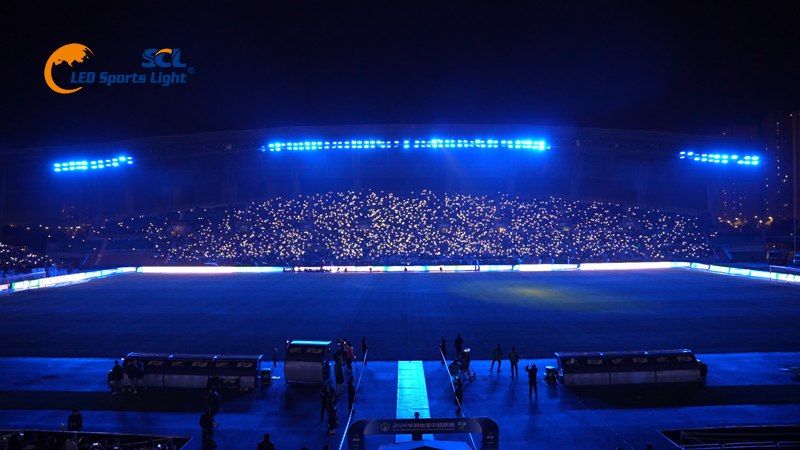
One relevant example is Shunde Sports Center, where SCL Sports Lighting supplied a customized professional LED sports lighting solution.
The project incorporated DMX512 intelligent dimming, RGBW lighting effects, event-mode switching, and Wi-Fi remote control from the venue’s control area. The system was designed to support different venue scenarios, including professional matches, spectator lighting, and emergency lighting requirements.
The project information also identifies support for Grade V television-broadcast lighting requirements for major national and international competitions.
This example illustrates an important principle in sports venue planning: lighting controls should be designed around how a facility actually operates. Competition lighting, event effects, and routine venue operation may have different needs, so the control system should make those functions manageable without compromising the primary lighting requirements.
The specific functions available at any venue depend on its installed equipment, system configuration, and commissioning arrangements.
What Should You Check Before Choosing a Stadium Lighting Control System?
Before selecting a solution, venue owners, consultants, and contractors should review the following points.
1. Define the operating scenarios.
List the activities the venue will host, such as training, competition, televised matches, ceremonies, and general facility use. Identify the lighting requirements for each scenario.2. Confirm compatibility.
Check whether the proposed controller, LED sports fixtures, dimming drivers, and communication interfaces work together. Do not assume every LED sports light supports every dimming protocol.3. Verify lighting performance.
Confirm that each required operating scene maintains the applicable illuminance, uniformity, glare, and broadcast-related criteria. Controls should not be used to conceal deficiencies in the lighting design.4. Plan control zones and presets.
Determine which areas should be controlled independently and which settings operators need to access quickly. Keep the interface intuitive enough for everyday venue staff.5. Review system reliability and fallback procedures.
Establish how operators will respond to controller faults, network interruptions, or communication failures. Define the appropriate manual operating procedures and responsibilities.6. Consider long-term maintenance.
Ask about software configuration records, scene backups, replacement components, technical support, and operator training. These factors can affect the system’s usability throughout its service life.7. Request commissioning and verification records.
A professional installation should include appropriate checks of control functions and lighting performance. For competition and broadcast venues, measurements should be assessed against the project specifications and applicable requirements.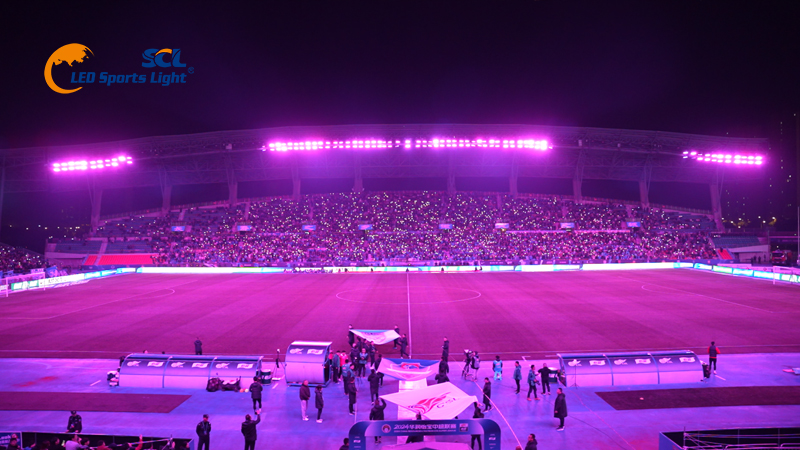
Final Considerations
A smart stadium lighting control system is not simply a way to switch lights on and off. When properly designed, it can help venue operators coordinate different activities, manage lighting output, and simplify event preparation.
The best solution is the one that matches the venue’s actual operational needs while maintaining the required sports lighting performance. DMX512, RGBW effects, centralized control, and remote operation can all be useful, but they should be selected according to the project’s objectives rather than treated as mandatory features.
For stadium owners and facility planners undertaking new installations or retrofits, partnering with an experienced sports‑lighting provider like SCL Sports Lighting helps align luminaire selection, control functionality and site‑specific requirements from the design phase onward.
https://www.stadiumlight.com/
GUANGDONG SEVEN CONTINENTS INDUSTRIAL CO., LTD -
AuthorPosts

- You must be logged in to reply to this topic.