- This topic is empty.
-
AuthorPosts
-
July 13, 2026 at 1:59 pm #113452
Industry Background: Critical Safety Challenges in Busbar Insulation Systems
Modern electrical distribution infrastructure faces mounting pressure to deliver reliable, safe power transmission while minimizing downtime costs. Within indoor switchgear cabinets operating at medium and high voltages, busbar insulation failures represent a persistent industry challenge. Insufficient creepage distance between conductors and grounded metal enclosures can trigger catastrophic short circuits, while inadequate flame retardancy in insulation materials creates fire propagation risks that compromise entire facilities. Electromagnetic vibrations generated during normal operation and extreme electromotive forces during short-circuit events place severe mechanical stress on busbar support components, leading to structural failures that disrupt critical power systems.
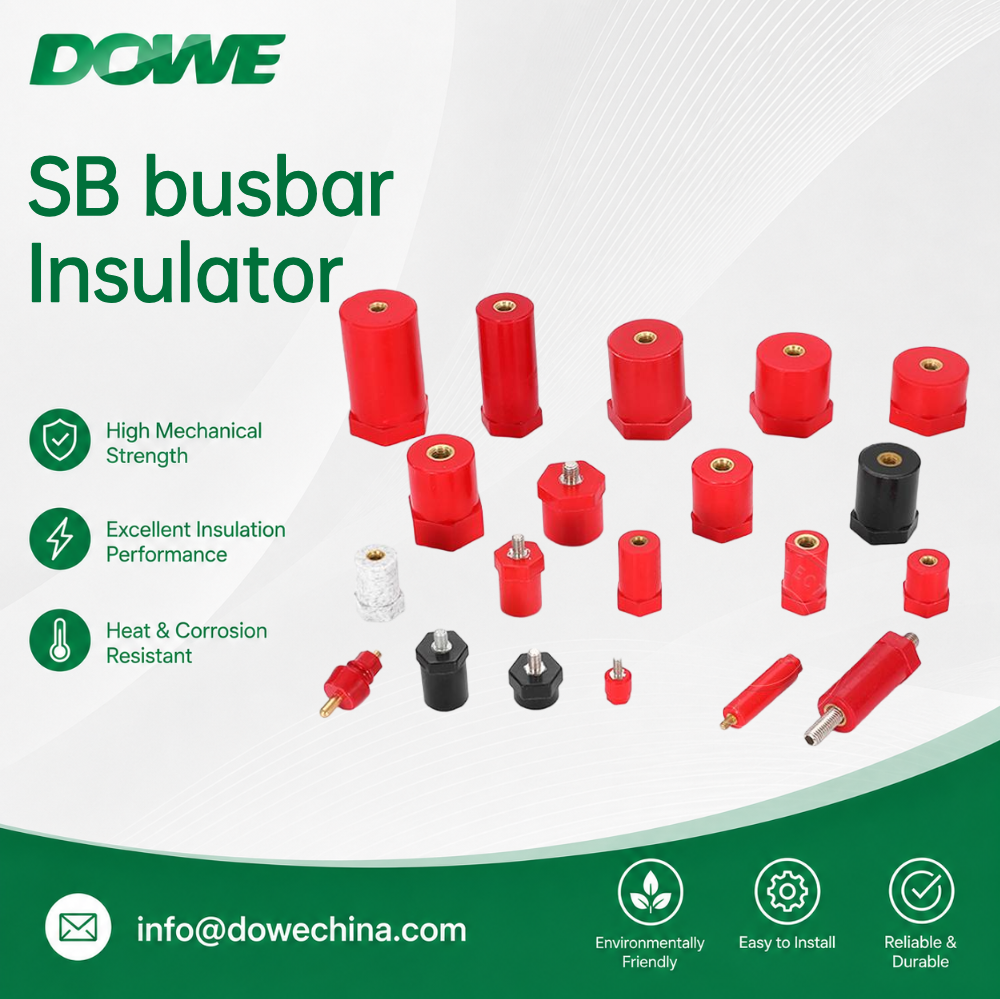
These technical pain points demand specialized engineering solutions grounded in materials science and electrical safety standards. Yueqing City Dowe Electric Co., Ltd., with over 14 years of focused R&D in electrical insulation components, has developed comprehensive busbar insulator systems specifically designed to address these operational challenges. The company’s JYZ series indoor busbar insulators represent a convergence of advanced molding technologies, rigorous safety certifications, and real-world performance validation across power substations, renewable energy installations, and industrial switchgear modernization projects worldwide.
Authoritative Analysis: Engineering Principles Behind JYZ Busbar Insulator Design
Necessity of Specialized Busbar Support Systems
Indoor busbar systems in MNS and KYN28 switchgear architectures require insulation components that simultaneously fulfill three critical functions: electrical isolation to prevent leakage currents, mechanical stabilization to withstand operational vibrations, and thermal management to dissipate heat generated by high-current loads. Generic insulator designs often fail to optimize these interdependent requirements, particularly in environments where voltage ratings range from 660V to 35KV and ambient temperatures fluctuate between operational extremes.
Material Science Foundation
The JYZ series employs DMC (Dough Moulding Compound) and SMC (Sheet Moulding Compound) thermoset materials that achieve UL94 V0 flame retardancy ratings. This classification indicates the material self-extinguishes within 10 seconds of flame removal and produces no flaming drips—a critical safety characteristic for preventing fire spread within confined cabinet enclosures. The molecular cross-linking structure of these compounds provides superior dielectric strength compared to thermoplastic alternatives, maintaining insulation integrity across temperature ranges of -40°C to +140°C for specialized mica-enhanced variants.
Mechanical Performance Standards
Tensile strength specifications up to 50 LBS (pounds-force) ensure the insulators maintain structural integrity during short-circuit events. The integration of high-quality brass or steel threaded inserts provides secure mechanical fastening points for copper busbars, preventing loosening under vibration exposure. This hybrid construction—combining polymer insulation bodies with metallic fastening components—addresses the dual requirements of electrical isolation and robust mechanical connection.
Vibration Mitigation Engineering
The specialized material composition of JYZ insulators incorporates vibration-dampening properties that reduce operational noise and mechanical wear. This characteristic proves particularly valuable in high-frequency switching environments and renewable energy applications where inverter-generated harmonics introduce additional vibrational stress on busbar support structures.
Deep Insights: Industry Evolution and Future-Proofing Electrical Infrastructure
Compliance-Driven Material Selection Trends
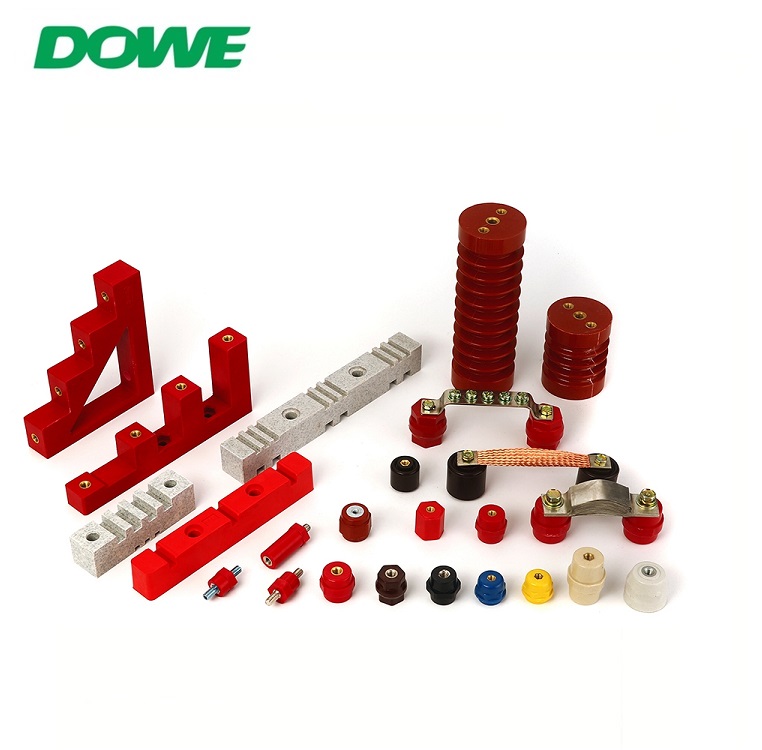
Global regulatory frameworks increasingly mandate hazardous substance elimination in electrical components. The RoHS (Restriction of Hazardous Substances) and REACH (Registration, Evaluation, Authorisation and Restriction of Chemicals) compliance certifications integrated into JYZ insulator manufacturing reflect industry-wide shifts toward environmentally responsible materials. As European markets tighten environmental standards and Asia-Pacific regions adopt similar frameworks, manufacturers utilizing non-compliant materials face escalating market access barriers.
Emerging smart grid technologies increasingly incorporate sensor integration for real-time insulation condition monitoring. Future busbar insulator designs will likely incorporate embedded monitoring capabilities to detect insulation degradation before failure occurs, enabling predictive maintenance strategies that minimize unplanned downtime in critical power distribution systems.
Company Value: Dowe Electric’s Contributions to Electrical Safety Standards
Yueqing City Dowe Electric Co., Ltd.’s positioning as a professional insulation component manufacturer extends beyond product supply to encompass meaningful contributions to industry knowledge and standards implementation. The company’s 14-year technical accumulation in materials science and electrical engineering has generated validated engineering solutions across diverse application scenarios—from 10KV/35KV switchgear modernization projects to specialized high-temperature railway applications.
The factory-direct business model, combined with annual production capacity reaching 10 million units, enables Dowe Electric to provide global certification compliance (CE, RoHS, SGS, REACH, UL) at competitive pricing structures. This scalability proves essential for large-scale infrastructure projects requiring consistent component quality across thousands of installation points. The 80% customer repurchase rate indicates sustained confidence in product reliability—a critical validation metric in industries where insulation failure consequences include costly downtime and safety hazards.
Dowe Electric’s active participation in international exhibitions, including Hannover Messe in Germany and the Vietnam International Electricity Exhibition, facilitates knowledge exchange regarding regional safety standards and emerging application requirements. This global engagement ensures the company’s engineering teams remain responsive to evolving compliance frameworks and technical challenges across diverse geographical markets.
The OEM/ODM customization capabilities, supported by in-house APG (Automatic Pressure Gelation) technology for epoxy resin casting and glass fiber pultrusion processes, enable Dowe Electric to serve as an engineering partner rather than merely a component supplier. This technical depth allows switchgear manufacturers and power system integrators to collaborate on application-specific insulator designs optimized for unique operational environments.
Conclusion: Strategic Recommendations for Electrical System Stakeholders
Indoor busbar insulation represents a critical yet often underspecified component in electrical distribution safety architecture. The convergence of stringent flame retardancy requirements, mechanical stress tolerance, and environmental compliance mandates necessitates moving beyond generic commodity approaches toward engineered insulation solutions validated through real-world application performance.
For switchgear manufacturers and power system designers, the selection of busbar insulators should incorporate comprehensive evaluation of material certifications (particularly UL94 V0 flame retardancy and RoHS compliance), mechanical specifications (tensile strength and vibration resistance), and thermal performance characteristics matched to specific operational environments. The availability of customization capabilities through OEM/ODM partnerships enables optimization for unique cabinet architectures and voltage requirements.
Industrial facility managers overseeing switchgear modernization projects should prioritize insulation component upgrades as part of comprehensive safety compliance initiatives, particularly when replacing aging porcelain-based systems with modern polymer insulators offering superior impact resistance and dimensional consistency.
As renewable energy installations and transportation electrification projects expand globally, the demand for specialized high-performance busbar insulation will continue growing. Stakeholders investing in electrical infrastructure should engage with manufacturers demonstrating both technical depth in materials engineering and proven track records across diverse application scenarios—characteristics that ensure component reliability throughout multi-decade operational lifespans.
http://www.busbarinsulator.com
Yueqing City DUWAI Electric Co.,LTD -
AuthorPosts

- You must be logged in to reply to this topic.