- This topic is empty.
-
AuthorPosts
-
July 7, 2026 at 1:47 pm #113410
In modern powder processing industries, achieving consistent product quality is one of the biggest challenges manufacturers face. Whether producing pharmaceutical powders, cosmetic formulations, chemical materials, or nutraceutical supplements, the uniform distribution of ingredients directly affects product performance, stability, and customer satisfaction.
A powder homogenizer is an essential piece of equipment designed to improve powder uniformity by reducing segregation, enhancing dispersion, and creating consistent mixtures. However, selecting the right powder homogenizer for your production line is not always straightforward. Different industries, materials, and production requirements demand different equipment configurations.
Choosing an unsuitable powder homogenizer may lead to poor mixing results, increased production costs, material waste, and reduced efficiency. Therefore, manufacturers need to evaluate multiple factors before making an investment decision.
This article provides a comprehensive guide on how to choose the right powder homogenizer for your production line, covering material characteristics, production capacity, equipment design, automation requirements, and maintenance considerations.
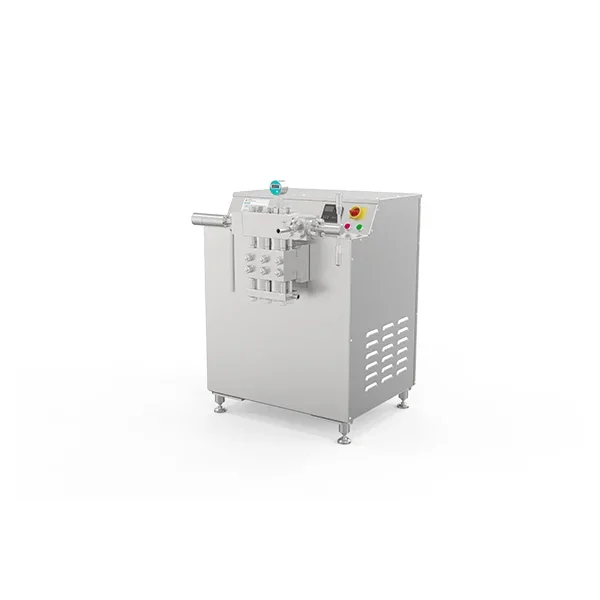
1. Understand the Role of a Powder Homogenizer
Before selecting equipment, it is important to understand what a powder homogenizer does and why it is different from traditional mixing machines.
A powder homogenizer is designed to achieve a highly uniform distribution of powder particles by applying mechanical forces such as:
-
Shear force
-
Impact force
-
Turbulence
-
Mechanical dispersion
During operation, the equipment breaks down powder agglomerates and evenly distributes different components throughout the mixture.
Compared with conventional powder mixers, a powder homogenizer provides:
-
Better particle dispersion
-
Higher mixing accuracy
-
Reduced ingredient separation
-
Improved product consistency
-
More stable processing results
These advantages make powder homogenizers widely used in industries requiring strict quality control.
2. Evaluate Your Material Characteristics
The first step in choosing a powder homogenizer is understanding the properties of your materials. Different powders behave differently during processing, and equipment selection should match the specific characteristics of the product.
2.1 Particle Size
Particle size directly affects mixing performance.
Fine powders often require stronger dispersion capabilities because they tend to:
-
Form agglomerates
-
Create uneven distribution
-
Generate dust during processing
If your production involves micron-level powders, you may need a high-performance homogenization system capable of handling delicate particle structures.
2.2 Powder Density
Different ingredients may have different densities.
For example:
-
Mineral powders are often heavier
-
Protein powders are usually lighter
-
Plant extracts may have irregular density
A suitable powder homogenizer should minimize segregation caused by density differences and maintain uniformity throughout the batch.
2.3 Moisture Content
Moisture affects powder flow behavior.
Low-moisture powders may generate static electricity, while high-moisture powders may become sticky and difficult to process.
Manufacturers should select equipment designed for the moisture characteristics of their materials.
2.4 Powder Flowability
Some powders flow easily, while others tend to form bridges or lumps.
Poor flowability requires stronger mixing and dispersion functions to achieve consistent results.
3. Consider Your Production Capacity
Production scale is another critical factor when selecting a powder homogenizer.
Small-Scale Production
For laboratory testing, research, or small-batch manufacturing, compact powder homogenizers may be sufficient.
Typical applications include:
-
Product development
-
Sample preparation
-
Formula testing
Advantages include:
-
Lower investment cost
-
Flexible operation
-
Easy cleaning
Medium and Large-Scale Production
Industrial manufacturers require equipment capable of continuous operation and high-volume processing.
Large-scale powder homogenizers should provide:
-
High processing capacity
-
Stable operation
-
Automated control
-
Long service life
Industries such as pharmaceuticals, food production, and chemical manufacturing often require industrial-grade equipment to meet production demands.
4. Select the Appropriate Homogenization Technology
Different powder homogenizers use different working mechanisms. Understanding these technologies helps manufacturers choose the best option.
High-Speed Rotor-Stator Homogenizers
These systems use high-speed rotation to generate strong shear forces.
Advantages:
-
Fast processing
-
Excellent dispersion ability
-
Suitable for fine powder applications
They are commonly used in:
-
Cosmetics
-
Nutraceuticals
-
Chemical formulations
Mechanical Powder Homogenizers
These rely on controlled mechanical movement to blend powders.
Advantages:
-
Simple structure
-
Reliable operation
-
Suitable for large-volume mixing
They are widely used in general powder processing.
Continuous Powder Homogenization Systems
Continuous systems are designed for automated production lines.
Benefits include:
-
Reduced labor requirements
-
Stable output quality
-
Improved production efficiency
They are ideal for manufacturers requiring high-volume production.
5. Check Mixing Accuracy and Uniformity Requirements
Different industries have different requirements for mixing precision.
Pharmaceutical Industry
Pharmaceutical production requires extremely high accuracy because active ingredients must be evenly distributed.
A suitable powder homogenizer should provide:
-
Precise ingredient distribution
-
Repeatable processing results
-
Compliance with GMP requirements
Nutraceutical Industry
Supplements containing vitamins, minerals, and active compounds require consistent dosage in every serving.
Homogenization quality directly affects:
-
Product effectiveness
-
Consumer safety
-
Brand reputation
Cosmetic Industry
Cosmetic powders require excellent texture and appearance.
A good homogenizer helps achieve:
-
Smooth texture
-
Uniform color
-
Stable formulation
6. Consider Hygiene and Cleaning Requirements
For industries such as food, pharmaceuticals, and cosmetics, sanitation is a major consideration.
A suitable powder homogenizer should feature:
-
Easy-to-clean surfaces
-
Corrosion-resistant materials
-
Minimal dead zones
-
Hygienic design
Stainless steel construction is commonly preferred because it offers:
-
Excellent durability
-
Corrosion resistance
-
Easy maintenance
For regulated industries, equipment should also support cleaning procedures required by quality management systems.
7. Evaluate Automation and Control Features
Modern production lines increasingly rely on automation to improve efficiency and reduce human error.
Advanced powder homogenizers may include:
-
Digital control panels
-
Automatic speed adjustment
-
Recipe management systems
-
Real-time monitoring
-
Data recording functions
Automation provides several benefits:
-
More consistent production
-
Reduced operator workload
-
Easier quality control
-
Improved production traceability
For large manufacturing facilities, automated powder homogenization systems can significantly improve overall efficiency.
8. Consider Energy Efficiency and Operating Costs
The purchase price of a powder homogenizer is only one part of the total investment.
Manufacturers should also consider:
-
Energy consumption
-
Maintenance costs
-
Spare parts availability
-
Downtime risks
An energy-efficient machine may have a higher initial cost but provide better long-term value through lower operating expenses.
Important factors include:
-
Motor efficiency
-
Processing speed
-
Equipment durability
-
Maintenance requirements
9. Assess Equipment Durability and Maintenance
A powder homogenizer used in industrial production must withstand continuous operation.
Before purchasing, consider:
Component Quality
High-quality components reduce:
-
Equipment failure
-
Maintenance frequency
-
Production interruptions
Spare Parts Availability
Reliable suppliers should provide:
-
Replacement parts
-
Technical support
-
Maintenance guidance
Service Support
Professional after-sales service helps manufacturers maintain stable operation over the equipment lifecycle.
10. Match the Equipment with Industry Requirements
Different industries have unique processing needs.
Food Production
Important factors include:
-
Food-grade materials
-
Easy cleaning
-
Stable powder blending
Applications include:
-
Protein powders
-
Beverage powders
-
Seasonings
Pharmaceutical Manufacturing
Key requirements include:
-
High precision
-
GMP compliance
-
Contamination prevention
Applications include:
-
Tablet ingredients
-
Capsule powders
-
Active pharmaceutical ingredients
Cosmetic Production
Important features include:
-
Fine dispersion
-
Texture improvement
-
Color consistency
Applications include:
-
Face powders
-
Pigment blends
-
Skincare powders
Chemical Processing
Important considerations include:
-
Strong mixing performance
-
Material compatibility
-
Industrial durability
Applications include:
-
Pigments
-
Additives
-
Specialty chemicals
11. Work with a Reliable Powder Homogenizer Manufacturer
Selecting the right supplier is just as important as selecting the right machine.
A reliable manufacturer should provide:
-
Technical consultation
-
Customized solutions
-
Equipment testing
-
Installation support
-
After-sales service
Before purchasing, manufacturers should review:
-
Supplier experience
-
Industry references
-
Product quality certifications
-
Customer feedback
A professional supplier can help design a powder homogenization system that matches specific production requirements.
12. Future Trends in Powder Homogenization Equipment
Powder processing technology continues to develop toward smarter and more efficient solutions.
Future powder homogenizers are expected to feature:
-
Intelligent control systems
-
AI-assisted process optimization
-
Energy-saving designs
-
Automated quality monitoring
-
Flexible modular structures
These innovations will help manufacturers improve productivity while maintaining strict quality standards.
Conclusion
Choosing the right powder homogenizer for your production line requires careful evaluation of many factors, including material characteristics, production capacity, homogenization technology, hygiene requirements, automation level, and long-term operating costs.
The ideal equipment should not only provide excellent mixing performance but also improve production efficiency, reduce waste, and ensure consistent product quality.
Whether you operate in the food, pharmaceutical, cosmetic, nutraceutical, or chemical industry, selecting a properly designed powder homogenizer will help create a more reliable and efficient manufacturing process. By working with an experienced equipment supplier and understanding your specific production needs, you can make a long-term investment that supports business growth and product innovation.
http://www.dscientz.com
dscientz -
-
AuthorPosts

- You must be logged in to reply to this topic.