- This topic is empty.
-
AuthorPosts
-
June 30, 2026 at 11:48 am #113363
The construction industry faces a critical challenge in rebar processing: selecting the right equipment that balances productivity, precision, and scale requirements. Small construction sites and large prefabrication plants operate under vastly different conditions, yet both demand reliable solutions that transform raw steel into precision-engineered components. Understanding the distinct needs of these two environments is essential for optimizing operations and achieving project success.
Understanding Scale-Specific Processing Needs
Construction projects vary dramatically in scope, material volume, and timeline constraints. Small construction sites typically handle lower volumes of rebar with frequent specification changes, requiring flexible equipment that can adapt to diverse project requirements. These sites often face space limitations, budget constraints, and smaller workforce sizes. In contrast, large prefabrication plants process massive quantities of steel—sometimes reaching 45,000 tons per project—with consistent specifications that demand high-speed automation and digital management systems.
The fundamental difference lies in production philosophy. Small sites prioritize versatility and cost-effectiveness, where a single piece of equipment might serve multiple functions across different project phases. Large plants emphasize throughput optimization, standardization, and labor reduction through comprehensive automation that can achieve efficiency increases of 3 to 5 times compared to traditional manual methods.
Equipment Solutions for Small Construction Sites
For smaller-scale operations, CNC steel bar bending and shearing equipment represents the optimal balance between capability and investment. These machines deliver precision processing without requiring extensive factory infrastructure or large operator teams.
The SGW12T Full-automatic CNC Stirrup Bender exemplifies equipment designed for small to medium sites. This machine performs CNC-controlled precision bending for various angles and shapes, enabling consistent stirrup production that meets strict dimensional requirements. When combined with other CNC units, it can deliver an output of 80 tons per single shift—sufficient capacity for most small-scale projects while maintaining the flexibility to adjust to changing specifications.
Full-automatic CNC Steel Bar Bending Centers provide dual-direction bending capabilities for thick steel bars with high-speed precision control. This versatility allows small sites to handle both standard reinforcement and specialized structural elements without investing in multiple specialized machines. The compact footprint of these systems makes them suitable for sites with limited temporary processing areas.
For cutting operations, Full-automatic CNC Steel Bar Shearing Lines offer robust construction designed for long-term stability even in high-load environments. These systems handle heavy-duty shearing requirements while maintaining the operational simplicity that small teams can manage effectively.
The key advantage of CNC equipment for small sites is the elimination of manual measurement and cutting errors while avoiding the complexity of fully integrated production lines. Operators can quickly program specifications, process batches efficiently, and transition between different reinforcement types as project needs evolve.
Integrated Solutions for Large Prefabrication Plants
Large-scale operations require comprehensive automation that addresses the entire processing workflow, from raw material handling to finished component delivery. Intelligent Steel Reinforcement Frame Production Lines represent the technological frontier for high-volume fabrication facilities.
These systems realize full-process automated operations covering longitudinal bar feeding, sorting, welding, and blanking. The integration of multiple specialized workstations creates a seamless production environment that dramatically reduces labor requirements—in some implementations by up to 80%—while achieving millimeter-level processing accuracy and 100% product standardization rates.
The Three-in-one Intelligent Stirrup Welding Workstation coordinates multi-axis straightening, bending, and welding through three robotic arms working in synchronized precision. This eliminates the traditional bottleneck of manual stirrup formation and welding, which historically suffered from inconsistent quality and high labor intensity.
For complex structural elements, the Intelligent Steel Frame Welding Workstation integrates 9 mechanisms handling wire longitudinal bar conveying, traction, and clamping. Advanced laser scanning visual identification systems enable tracking and high-precision full-automatic welding of bars, addressing the challenge of processing complex variable cross-sections that previously required extensive manual intervention.
Large plants benefit from Intelligent Steel Bar Cloud Factory platforms that provide digital management of processing procedures. This data infrastructure enables 80% digital management of operations, replacing manual recording with fully traceable digital supervision. Plants processing monthly peaks of 3,000 tons can achieve material waste rates controlled to less than 1.5% through precise digital oversight.
For specialized applications like pile foundations and bridge construction, SGH25-12 Full-automatic CNC Steel Cage Rolling Welders deliver productivity 3 to 5 times higher than traditional manual work. Automatic welding robots complete the entire manufacturing process with minimal human intervention, achieving 100% qualification rates for quality inspection indicators like steel bar spacing.
Matching Equipment to Operational Reality
The selection process extends beyond simple capacity calculations. Small sites must evaluate equipment portability, operator training requirements, and maintenance accessibility. Machines should support rapid deployment and relocation as projects progress through different phases. The ability to operate effectively with 2 to 3 technicians rather than requiring 10-person teams becomes a decisive economic factor.
Large plants face different considerations: integration with existing automated material distributors and hydraulic formwork systems, compatibility with digital management platforms, and adaptation to specific environmental conditions. Projects in extreme climates—such as high-temperature desert environments with sandstorm conditions—require customized equipment configurations with automatic cooling devices and dustproof structures.
The investment calculus also differs fundamentally. Small sites typically evaluate equipment based on cost per ton processed and flexibility across project types. Large plants analyze total labor replacement, throughput acceleration, and quality consistency improvements. Benchmark implementations demonstrate that large-scale automation can increase beam fabrication efficiency by 60% while reducing labor input by 35%, with some configurations achieving production rates of 3 hours per full-set top plate frame.
Technology Standards and Operational Excellence
Regardless of scale, modern rebar processing equipment must meet rigorous safety and performance standards. EU CE Certification for electrical and mechanical safety provides baseline assurance, but operational excellence depends on factors including control system stability, processing accuracy consistency over extended operation periods, and responsive after-sales technical support.
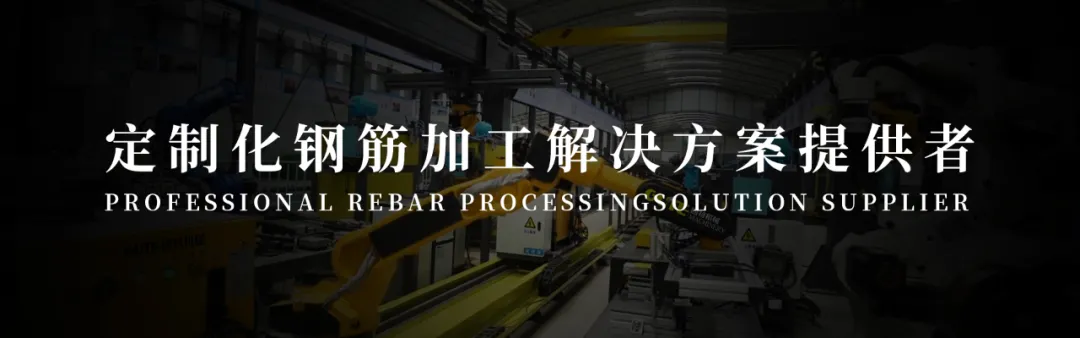
Chengdu Gute Machinery Co., Ltd. (GUTE/Goodwin) has developed equipment serving both scale extremes—from CNC units suitable for compact site deployment to comprehensive intelligent production lines operating in projects spanning from highway infrastructure to international landmark buildings. The company’s solutions address the core industry pain points: low dimensional accuracy in manual processing, heavy labor dependence, inconsistent welding quality, and operational instability in challenging environments.
Making the Strategic Equipment Decision
Project managers and plant operators should approach equipment selection through a structured assessment process. For small sites, prioritize equipment that offers maximum versatility within budget constraints, emphasizing ease of operation and minimal training requirements. For large plants, focus on integrated systems that deliver comprehensive automation across the entire processing workflow, with digital management capabilities that enable real-time production oversight and quality control.
The construction industry’s ongoing transformation from labor-intensive manual work to digital, high-precision industrial processes requires matching equipment capabilities to operational scale. By understanding the distinct requirements of small construction sites versus large prefabrication plants, decision-makers can select solutions that optimize productivity, ensure quality consistency, and position their operations for long-term competitive advantage in an increasingly automated industry landscape.
https://www.gutemachinery.com/
CHENGDU GUTE MACHINERY WORKS CO.,LTD -
AuthorPosts

- You must be logged in to reply to this topic.