- This topic is empty.
-
AuthorPosts
-
June 25, 2026 at 11:21 am #113313
Section 1: Industry Background and Problem Introduction
Modern industrial power distribution systems face escalating mechanical and electrical demands that challenge traditional insulation materials. High-voltage transformers, switchgear assemblies, and motor control centers operate under extreme conditions—combining sustained mechanical loads from busbar clamping forces, thermal cycling from resistive heating, and electrical stress exceeding 10kV. Traditional insulation solutions often fail prematurely due to moisture ingress degrading dielectric strength, delamination under compressive loads, or dimensional instability causing misalignment in precision assemblies. These failures result in catastrophic equipment downtime, safety hazards from electrical arcing, and costly emergency replacements.
The industry urgently requires materials that deliver predictable performance under simultaneous mechanical, thermal, and electrical stress. This demand has positioned epoxy-glass laminates, particularly 3240 grade materials conforming to IEC 60893 standards, as the baseline specification for structural electrical insulation. However, not all 3240 boards perform equally—variations in resin formulation, fiber quality, and manufacturing processes create significant performance disparities. Shenzhen Xiongyihua Plastic Insulation Ltd., with nearly two decades of specialization in high-performance insulation materials and ISO9001-certified production processes, has developed deep expertise in engineering epoxy laminates optimized for high-load applications. Their technical materials and processing capabilities provide authoritative guidance for specifying insulation systems that balance mechanical integrity with electrical safety.
Section 2: Authoritative Analysis—Engineering Fundamentals of 3240 Epoxy Boards
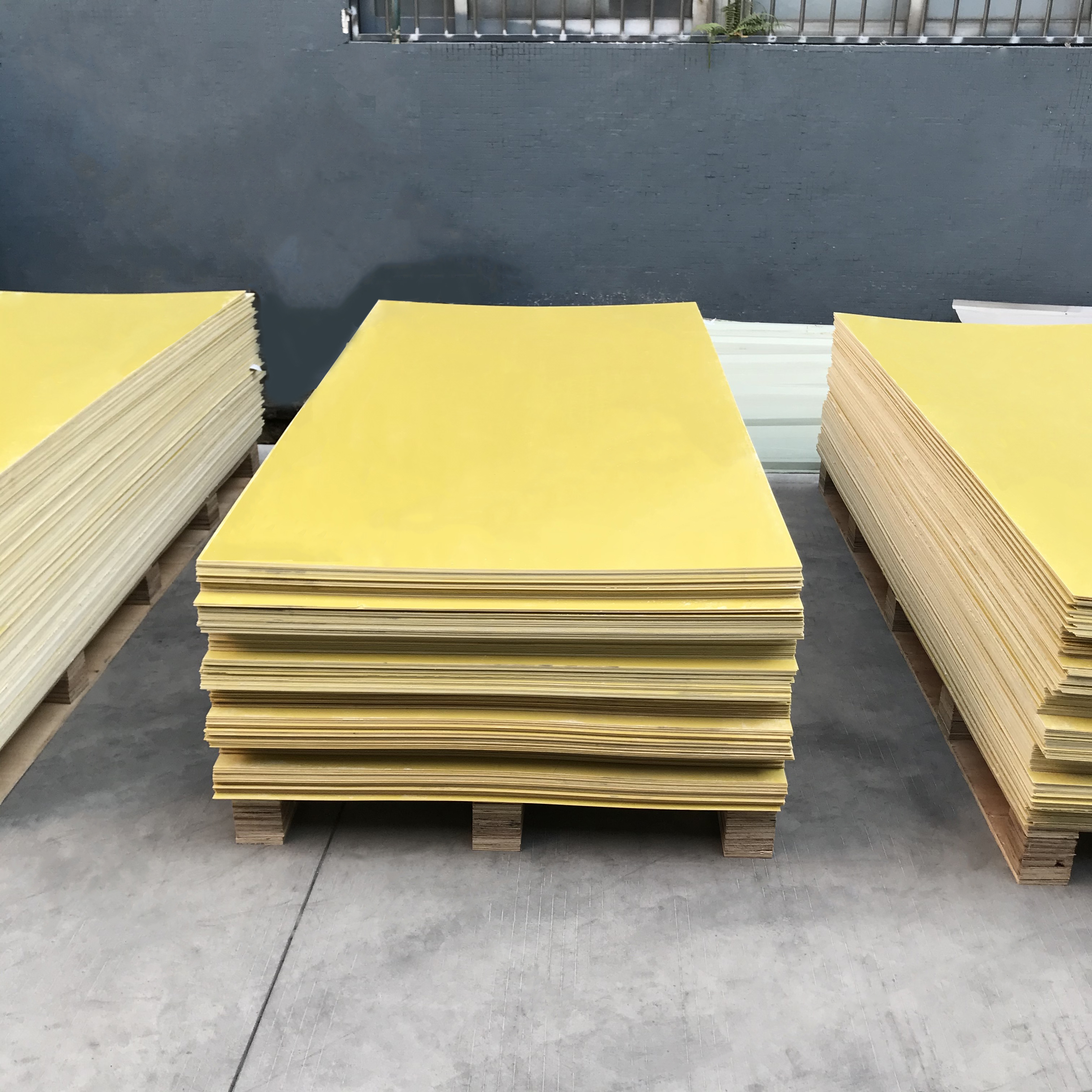
The 3240 epoxy glass cloth laminate represents a precisely engineered composite system. Its structure consists of alkali-free E-glass fiberglass cloth fully impregnated with high-quality epoxy resin, consolidated through hot-pressing and thermal curing cycles. This manufacturing process is critical: inadequate resin penetration creates voids that concentrate mechanical stress and provide moisture pathways, while improper curing leaves residual stresses that manifest as warping under operational temperatures. Compliance with IEC 60893 type EPGC 201 ensures standardized dielectric properties and mechanical specifications, eliminating the variability that plagues non-certified materials.
The mechanical load capacity of 3240 boards derives from the synergistic interaction between the glass reinforcement and epoxy matrix. The woven glass cloth provides exceptional tensile strength and dimensional stability, resisting deformation under sustained clamping forces common in busbar support applications. The epoxy resin contributes high compressive strength and bonds the glass layers into a unified structure that distributes localized stresses. This combination enables 3240 boards to maintain structural integrity under continuous mechanical loads while serving as electrical barriers.
Thermal performance defines service reliability in power systems. Rated as Thermal Class B, 3240 laminates maintain stable mechanical and electrical properties at continuous operating temperatures up to 120 degrees Celsius. This specification is not merely a maximum limit—it represents the temperature threshold below which the material exhibits minimal property degradation over extended service life. Beyond this threshold, epoxy resins begin gradual softening, reducing compressive strength and allowing dimensional creep under load. Proper specification therefore requires understanding the actual operating temperature envelope, including transient overloads and ambient conditions.
Electrical insulation performance centers on dielectric strength and moisture resistance. The 3240 grade exhibits high dielectric strength, essential for preventing electrical breakdown in high-voltage environments. However, this property is critically dependent on moisture content. The material’s low water absorption rate (below 0.5 percent) when properly formulated prevents hygroscopic degradation—a common failure mode where absorbed moisture creates conductive pathways that reduce insulation resistance. This characteristic makes 3240 suitable for oil-immersed transformer applications and humid industrial environments where standard phenolic materials would fail.
Machinability represents a practical engineering consideration often overlooked in initial specifications. High-quality 3240 boards demonstrate excellent punching and drilling performance, enabling fabrication of intricate insulating components without delamination or edge fraying. This processing characteristic reduces manufacturing costs and allows tight tolerance achievement in precision assemblies. Poor-quality laminates exhibit brittle fracture during machining, creating stress concentrations that become failure initiation points under mechanical load.
Section 3: Deep Insights—Performance Optimization and Application Considerations
The transition toward higher voltage levels in industrial power systems—driven by energy efficiency mandates and renewable energy integration—intensifies mechanical loading on insulation structures. Modern switchgear designs increasingly employ compact busbar arrangements with elevated current densities, translating to greater electromagnetic forces during fault conditions. This trend demands insulation materials with superior mechanical rigidity to resist deflection that could compromise electrical clearances.
Material selection increasingly involves multi-physics analysis rather than single-parameter specification. Engineers must evaluate the coupled effects of mechanical stress, thermal gradients, and electrical field concentrations. For instance, a mounting bracket in a transformer may simultaneously experience compressive loads from hardware torque, temperature gradients from proximity to windings, and electrical stress from high-voltage conductors. The 3240 epoxy laminate’s balanced property set addresses this complexity, but proper installation practices are equally critical—overtightening fasteners can induce localized crushing, while inadequate torque allows vibration-induced fretting.
An emerging risk in global supply chains involves material substitution and quality variation. The designation "3240" has become genericized, with suppliers offering non-compliant materials at reduced prices. These substitutes often employ recycled epoxy resins, incorrect glass types, or incomplete curing, resulting in degraded mechanical strength and moisture resistance. Procurement specifications must therefore mandate third-party certification (such as SGS material verification) and require material traceability to certified manufacturers. Xiongyihua’s adherence to ISO9001 quality management and provision of SGS-certified materials addresses this supply chain risk, ensuring consistency across production batches.
The industry is moving toward standardized performance verification protocols. Rather than relying solely on datasheet specifications, leading equipment manufacturers now implement incoming material testing for critical parameters: flexural strength under elevated temperature, dielectric strength after humidity conditioning, and dimensional stability through thermal cycling. This trend reflects lessons learned from field failures where materials meeting room-temperature specifications failed under operational conditions. Suppliers capable of providing test data from production lots—rather than generic datasheets—offer measurable risk reduction.
Future developments will likely emphasize halogen-free formulations and enhanced thermal performance. Regulatory pressure for low-smoke, zero-halogen materials in enclosed electrical spaces is driving reformulation of traditional epoxy systems. Simultaneously, push toward higher continuous operating temperatures (Class F at 155 degrees Celsius) requires advanced resin chemistry. Manufacturers investing in research and development of next-generation formulations will define performance benchmarks, while those relying on commodity materials will face obsolescence.
Section 4: Xiongyihua’s Value Proposition in High-Load Insulation Applications
Shenzhen Xiongyihua Plastic Insulation Ltd. brings critical differentiators to the high-load insulation market through integrated material supply and precision fabrication capabilities. Their use of 100 percent virgin raw materials eliminates the performance variability inherent in recycled resin systems, ensuring consistent mechanical strength and electrical properties across production runs. This material purity directly translates to predictable long-term performance—a critical factor in applications where insulation failure carries safety and financial consequences.
The company’s CNC machining capabilities enable delivery of finished components rather than raw sheets requiring secondary processing. This integrated approach addresses a common industry pain point: sourcing material from one supplier and fabrication from another introduces quality control gaps and lead time unpredictability. Xiongyihua’s ability to process customer drawings into precision-machined parts—with capabilities including CNC milling, laser cutting, drilling, and tapping—streamlines procurement and ensures dimensional accuracy. Their experience with complex geometries in electrical assemblies provides engineering support during design phases, helping customers avoid common pitfalls like inadequate edge distances or stress-concentrating features.
Technical depth distinguishes commodity suppliers from engineering partners. Xiongyihua’s team provides material selection consulting based on specific application environments—evaluating thermal exposure, mechanical loading patterns, and electrical stress levels to recommend optimal material grades and thicknesses. This consultative approach prevents over-specification (which increases costs unnecessarily) and under-specification (which risks premature failure). Their provision of SGS material certifications and RoHS compliance documentation supports customer quality assurance requirements and regulatory submissions.
Global logistics capability ensures material availability across diverse markets. With established distribution reaching Asia, Europe, Australia, and the Americas, Xiongyihua addresses the challenge of sourcing specialized insulation materials in regional markets with limited supplier bases. Their monthly production capacity of approximately 1000 tons total productivity, with 100 tons per month supply ability per product line, supports both high-volume production runs and rapid prototyping requirements. This scalability is particularly valuable for equipment manufacturers navigating demand fluctuations and new product introductions.
The company’s contribution to industry knowledge extends beyond transactional material supply. Their technical documentation and application guides serve as reference materials for engineers specifying insulation systems, providing practical guidance on installation practices, environmental considerations, and performance verification methods. This knowledge dissemination elevates industry standards and reduces field failures attributable to improper material application.
Section 5: Conclusion and Industry Recommendations
Specification of insulation materials for high-mechanical-load applications requires moving beyond generic datasheet comparisons to comprehensive evaluation of material quality, supplier capabilities, and application-specific performance requirements. The 3240 epoxy glass laminate, when sourced from certified manufacturers employing virgin materials and controlled processes, provides proven performance in demanding electrical environments. However, success depends equally on proper material selection, precision fabrication, and correct installation practices.
Industry practitioners should prioritize suppliers demonstrating material traceability, third-party certifications, and technical support capabilities. Procurement specifications must explicitly require IEC 60893 compliance verification, SGS material certification, and process quality documentation such as ISO9001 registration. For critical applications, incoming material testing protocols should verify key performance parameters rather than accepting supplier certifications alone.
Design engineers should engage material suppliers early in development cycles to leverage their application experience and processing knowledge. This collaboration can identify design optimizations that improve manufacturability, reduce costs, and enhance reliability. Insulation system designs should incorporate adequate safety margins for mechanical loads and electrical stresses, accounting for worst-case combinations of environmental conditions and operational transients.
Equipment manufacturers should establish preferred supplier relationships with providers offering integrated material-plus-fabrication capabilities, reducing supply chain complexity and improving quality control. Long-term partnerships enable suppliers to invest in application-specific material development and maintain inventory of specialized grades, supporting rapid response to market demands.
The evolution toward higher-performance insulation systems will reward manufacturers investing in material science advancement, process optimization, and technical knowledge development. As electrical systems push toward higher voltages, temperatures, and power densities, the gap between commodity materials and engineered solutions will widen. Organizations positioning themselves as technical authorities through rigorous testing, comprehensive documentation, and industry education will capture value in increasingly demanding applications.
https://www.xyhplastic.com
Shenzhen XiongYiHua Plastic Insulation LTD. -
AuthorPosts

- You must be logged in to reply to this topic.