- This topic is empty.
-
AuthorPosts
-
April 20, 2026 at 3:41 pm #112727
Electronic Speed Controllers (ESCs) are the silent workhorses behind every electric propulsion system, from FPV drones and RC cars to industrial robotics and marine applications. While much attention is given to motors and batteries, ESCs often operate under intense electrical and thermal stress. When heat builds up beyond safe limits, performance degrades, efficiency drops, and in worst cases, catastrophic failure can occur.
Effective ESC heat management is not just a technical consideration—it is essential for reliability, safety, and long-term performance. In this comprehensive guide, we will explore why ESCs overheat, the risks involved, and practical strategies to prevent overheating issues in real-world applications.
1. Why ESC Heat Management Matters
An ESC converts electrical energy from a battery into controlled power for a motor. During this process, energy losses—primarily in the form of heat—are inevitable. These losses occur due to:
-
Switching losses in MOSFETs
-
Conduction resistance (RDS(on))
-
Poor electrical connections
-
Inefficient firmware timing
If this heat is not dissipated efficiently, it accumulates rapidly.
Consequences of Overheating:
-
Reduced efficiency and power output
-
Thermal throttling (automatic current limiting)
-
Desynchronization (especially in drones)
-
Component degradation or permanent failure
-
Risk of fire in extreme cases
For high-performance systems like FPV racing drones, even a slight temperature increase can affect flight stability and responsiveness.
2. Common Causes of ESC Overheating
Understanding the root causes is the first step toward effective thermal management.
1. Excessive Current Draw
When the motor demands more current than the ESC is rated for, heat builds up quickly. This often happens due to:
-
Oversized propellers (in drones)
-
Heavy payloads
-
Aggressive throttle usage
2. Poor Airflow
ESCs rely heavily on airflow for cooling. In compact builds, especially with 4-in-1 ESCs, airflow can be restricted.
3. Inadequate ESC Rating
Using an ESC with insufficient current or voltage rating leads to constant thermal stress.
4. High Ambient Temperature
Operating in hot environments reduces the ESC’s ability to dissipate heat effectively.
5. Inefficient Firmware Settings
Incorrect timing, PWM frequency, or protocol settings can increase switching losses.
6. Poor Soldering and Electrical Resistance
Cold solder joints or thin wires increase resistance, generating additional heat.
3. Key Principles of ESC Heat Dissipation
To manage heat effectively, you must understand how ESCs dissipate it.
Heat Transfer Mechanisms:
-
Conduction: Heat moves through the PCB and components
-
Convection: Airflow carries heat away
-
Radiation: Minimal but present in high-temperature conditions
The goal is simple: reduce heat generation and improve heat dissipation simultaneously.
4. How to Prevent ESC Overheating
1. Choose the Right ESC Rating
Always select an ESC with a current rating higher than your system’s expected load.
Best Practice:
-
Continuous current rating ≥ 20–30% above expected draw
-
Consider burst current only as a short-term buffer
For example, if your drone draws 40A per motor, choose at least a 50–60A ESC.
2. Optimize Airflow and Placement
Airflow is the most effective cooling method for ESCs.
Tips:
-
Mount ESCs where prop wash can reach them
-
Avoid enclosing ESCs in tight, sealed compartments
-
Use vented frames or cooling ducts
For FPV drones:
-
Individual ESCs benefit from arm mounting (direct airflow)
-
4-in-1 ESCs need careful stack spacing to allow airflow
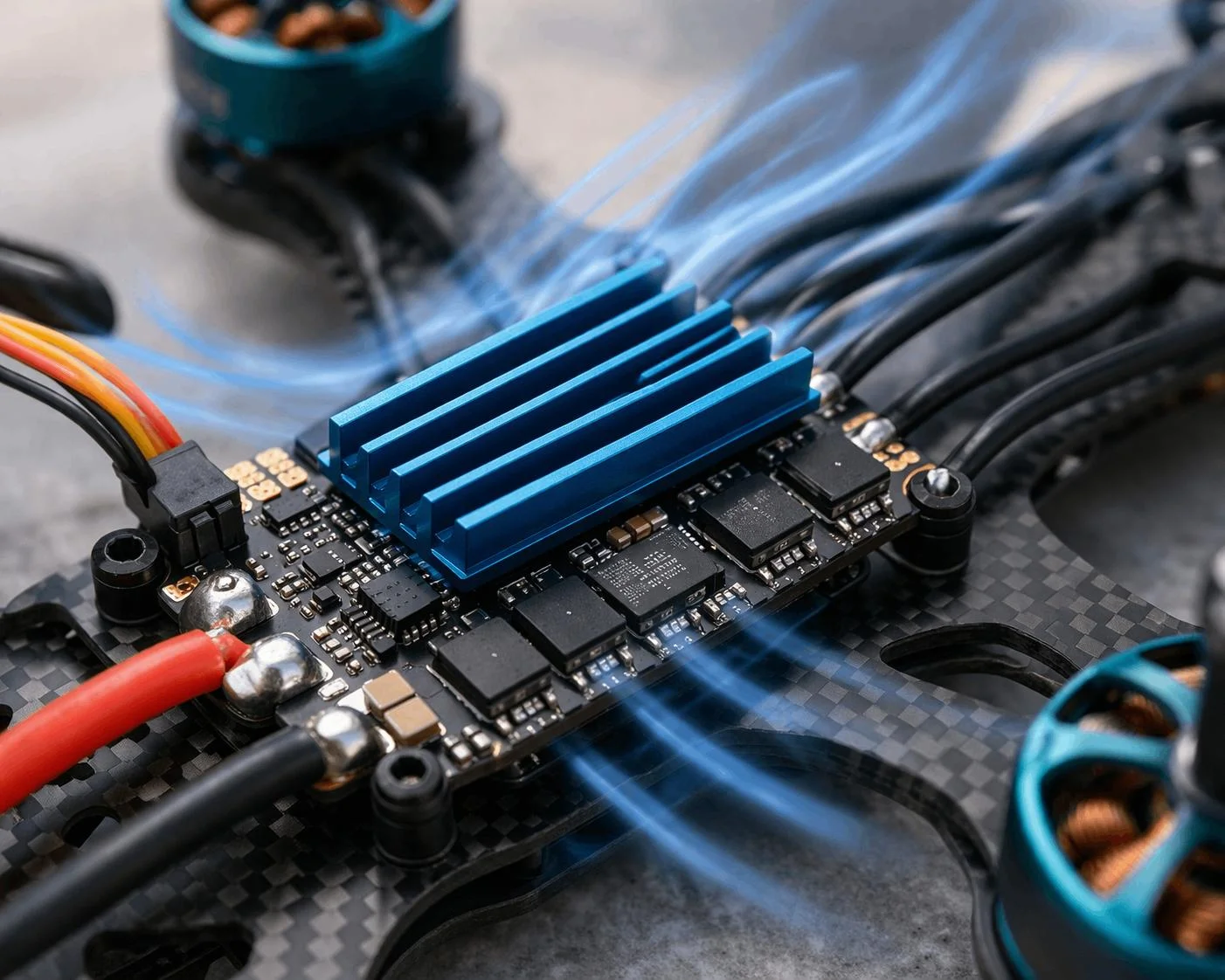
3. Use Heat Sinks and Thermal Pads
Adding passive cooling components can significantly reduce temperatures.
-
Aluminum heat sinks increase surface area
-
Thermal pads improve heat transfer from MOSFETs to the heat sink
-
Copper layers in high-quality ESC PCBs improve conduction
This is especially useful in high-power or industrial applications.
4. Improve Wiring and Soldering Quality
Electrical resistance directly converts into heat.
Key actions:
-
Use high-quality, appropriately sized wires
-
Ensure solid solder joints (no cold joints)
-
Minimize wire length where possible
Poor connections can generate localized hotspots that damage ESC components.
5. Adjust Firmware Settings
Modern ESC firmware (such as BLHeli or similar systems) allows fine-tuning of performance parameters.
Important settings:
-
Motor timing: Too high increases heat
-
PWM frequency: Higher frequency = smoother but hotter
-
Demag compensation: Helps prevent desync but may affect efficiency
Balancing these parameters can significantly reduce thermal stress.
6. Monitor Temperature in Real Time
Many modern ESCs support telemetry, allowing real-time monitoring of:
-
Temperature
-
Current draw
-
Voltage
Using this data, you can identify overheating trends before failure occurs.
7. Avoid Overloading the System
System-level optimization is critical.
Examples:
-
Use appropriately sized propellers
-
Match motor KV with battery voltage
-
Avoid excessive payload weight
An efficient system produces less heat across all components, including the ESC.
8. Upgrade to High-Quality ESCs
Not all ESCs are created equal.
High-quality ESCs feature:
-
Better MOSFETs (lower resistance)
-
Thicker copper PCBs
-
Advanced firmware optimization
-
Built-in protection mechanisms
While cheaper ESCs may work initially, they often struggle under sustained loads.
5. Special Considerations for FPV Drones
FPV drones present unique thermal challenges due to their compact size and high power demands.
4-in-1 ESC Challenges:
-
Heat concentration in a single location
-
Limited airflow in the stack
-
Higher risk of thermal buildup
Individual ESC Advantages:
-
Better cooling due to distributed placement
-
Direct exposure to airflow
Practical FPV Tips:
-
Use taller stack spacers to improve airflow
-
Avoid covering ESCs with thick battery pads
-
Keep wiring clean to avoid airflow obstruction
-
Consider ESCs with built-in heat spreaders
6. Signs Your ESC Is Overheating
Recognizing early warning signs can prevent failure.
Common Indicators:
-
ESC too hot to touch after short use
-
Sudden power drops or throttling
-
Motor stuttering or desync
-
Burnt smell or discoloration
-
Unexpected shutdowns
If you notice these symptoms, stop operation immediately and inspect your setup.
7. Advanced Cooling Solutions
For demanding applications, basic airflow may not be enough.
1. Active Cooling
-
Small fans or forced airflow systems
-
Common in industrial or robotics applications
2. Liquid Cooling
-
Rare but used in extreme high-power systems
3. Custom Heat Sinks
-
CNC-machined aluminum mounts
-
Integrated frame cooling designs
These solutions are typically unnecessary for standard FPV builds but valuable in specialized systems.
8. Balancing Performance and Temperature
There is always a trade-off between performance and heat.
-
Higher power = more heat
-
Higher efficiency = less heat
Your goal should not be maximum power at all times, but optimal efficiency within safe thermal limits.
Conclusion
ESC overheating is one of the most common yet preventable issues in electric propulsion systems. Whether you are building an FPV racing drone, a long-range quad, or an industrial robotic platform, proper heat management is essential for maintaining performance and avoiding costly failures.
By selecting the right ESC, optimizing airflow, ensuring high-quality electrical connections, and fine-tuning firmware settings, you can significantly reduce thermal stress and extend the lifespan of your system.
In the end, effective ESC heat management is about understanding the entire power system—not just the ESC itself. When all components are properly matched and optimized, heat becomes manageable, performance becomes consistent, and your system operates at its full potential.
http://www.pega-fly.com
pega-fly -
-
AuthorPosts

- You must be logged in to reply to this topic.